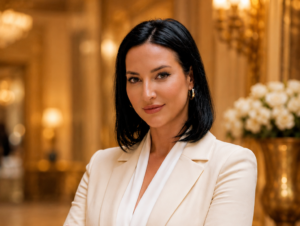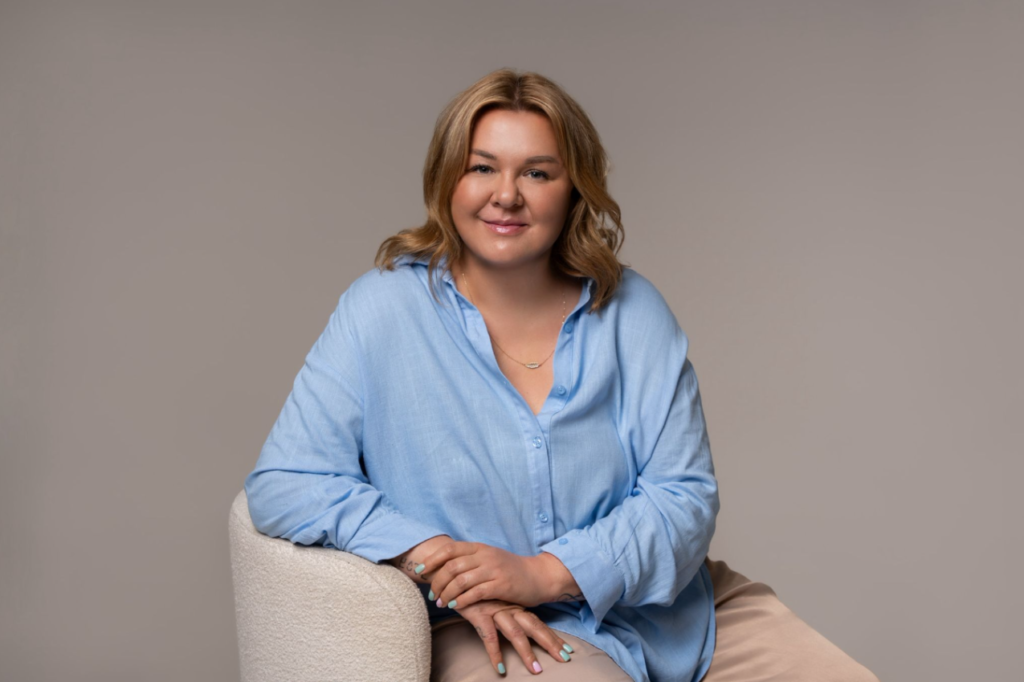
Agnes Hecking, Founder of Creative Face Academy
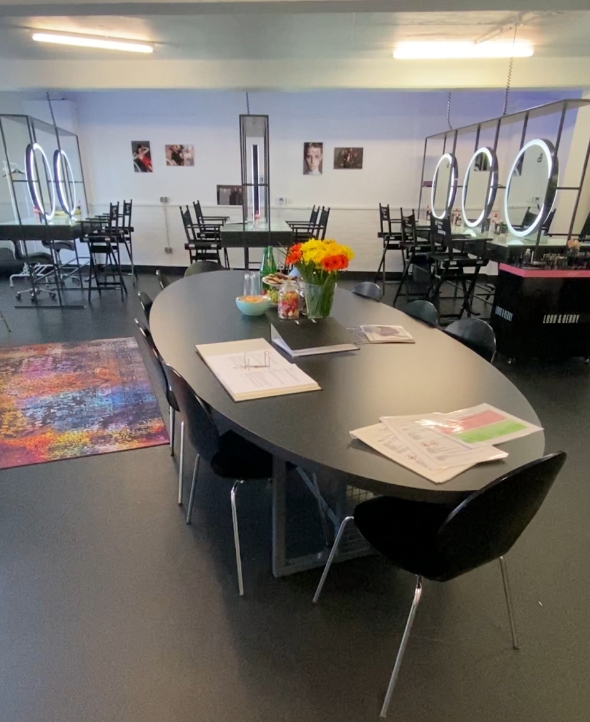
For ten years, Creative Face Academy in Cologne has been training make-up artists for professional careers. Founder Agnes Hecking brings 27 years of industry experience to the academy, combining professional craftsmanship with the realities of working in the industry. Now, the company is taking its next step with the launch of Creative Mask Academy.
But what does a make-up artist really need today? What role do social media, personality and creativity play? And could AI eventually replace make-up artists or professional mask artists?
To dig deeper into these questions—and to bring our readers real, practical insight from the industry—our team reached out to Agnes Hecking. With nearly three decades in the industry and a decade of shaping the next generation of artists, Agnes has built something rare: a school that treats make-up not as a set of techniques, but as a living profession rooted in craftsmanship, empathy, and personal signature. Her decision to expand into mask artistry feels less like a new course offering and more like a natural continuation of a clear vision — one that refuses to separate beauty from character, or skill from the human connection that makes the work meaningful. Speaking with her left us with the quiet conviction that the future of this craft is in very good hands.
What surprises your students most during their training?
Agnes Hecking: Many are surprised by how much the profession actually involves. Make-up and technique are only part of it.
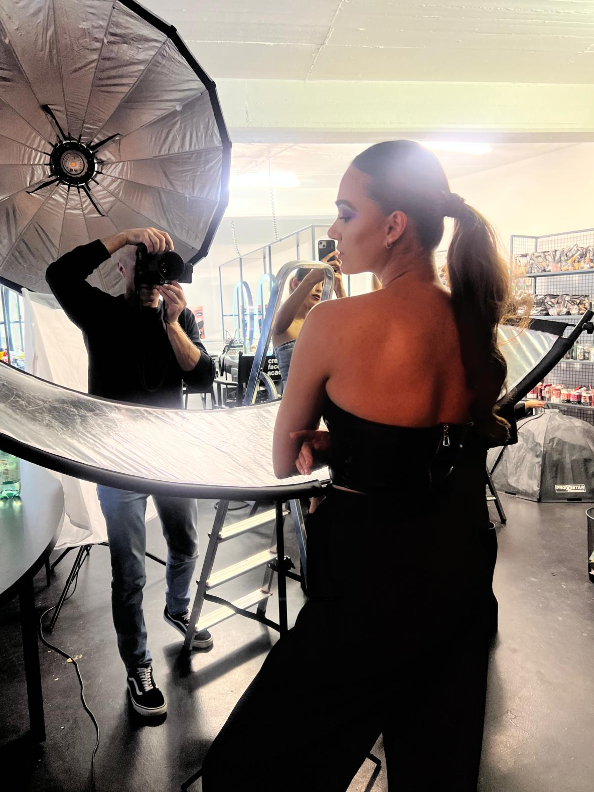
Suddenly, they are learning how to communicate with clients, behave professionally on set, pack a set bag, work hygienically, stay calm under pressure and collaborate with photographers, models, stylists and production teams.
Many arrive thinking, “I love make-up.” During their training, they realise: “I’m learning a profession.”
That change in perspective is incredibly important.
What is the biggest difference between social media make-up and professional work?
Agnes Hecking: Social media can be incredibly inspiring, but it often shows a perfect final result. You don’t always see what happened behind the scenes.
In professional work, there is no filter to hide behind. Make-up has to work on real skin, under different lighting conditions and, in photography, film or television, often under unforgiving high-resolution cameras.
You are also not working for likes. You are working for a client, a production or a creative concept.
Social media is an important tool for visibility and marketing today. But followers cannot replace craftsmanship.
What is the most common mistake young make-up artists make?
Agnes Hecking: Many focus too much on recreating specific looks.
A professional make-up artist needs to understand faces. Not every eyeliner works on every eye shape. Not every foundation works on every skin type. And something that looks fantastic on Instagram may not work for the person sitting in front of you.
Understanding principles is more valuable than memorising looks.
Once you understand why something works, you can adapt.
What happens after the training?
Agnes Hecking: That question is extremely important to us because the profession really begins when the training ends.
We teach customer acquisition, portfolio building, social media, professional presentation and how to approach those first jobs.
Students also learn how a professional set works, what belongs in a set bag and how to communicate with clients and other departments.
We never want someone to finish their training thinking, “Now I can do make-up – but what do I do with it?”
The goal is to turn their skills into a genuine professional perspective.
Can creativity actually be taught?
Agnes Hecking: I don’t think creativity can be taught according to a fixed formula. But you can learn how to develop it.
First, you need craftsmanship. When you understand your tools and techniques, you gain the freedom to experiment with them.
We don’t want our students to become copies of one another. We want them to develop their own signature.
Sometimes people simply need the confidence to try an idea that initially seems a little crazy.
For me, creativity begins where knowledge meets curiosity.
How has the profession of make-up artistry changed?
Agnes Hecking: Enormously.
Today, a make-up artist is often an artist, content creator and their own personal brand at the same time.
Social media has created incredible opportunities, but also pressure. Work is compared instantly, trends change constantly, and clients sometimes arrive with heavily edited or filtered reference images.
Professional artists therefore need to manage expectations while also knowing how to make their own work visible.
Craftsmanship remains the foundation, but the profession has become much more diverse.
How important is personality in this profession?
Agnes Hecking: Extremely important.
Make-up artists work very closely with people. You may meet an actor just before an emotional scene, a model before a major shoot or a client preparing for an important moment.
You need to know when to talk – and sometimes when not to.
Professionalism also means empathy, discretion, reliability and teamwork.
You can be technically brilliant, but if nobody enjoys working with you, building a career will still be difficult.
Could AI and digital effects eventually replace make-up artists or mask artists?
Agnes Hecking: They will change our industry – they already are. But I don’t believe they will completely replace the craft.
An actor still stands in front of a real camera. A wig has to fit. A prosthetic has to work on real skin. An injury has to look convincing from different angles.
And, most importantly, we work with people.
Technology will become another tool and change certain processes. But creativity, craftsmanship and human collaboration on set cannot simply be digitalised away.
Where does make-up end and mask artistry begin?
Agnes Hecking: The line is fluid, and that is exactly what makes the connection so exciting.
Make-up focuses strongly on beauty, fashion, photography, film and television. Mask artistry takes the craft further into special effects, prosthetics, wigs, facial hair, moulding, face and body painting and complete character transformations.
With Creative Mask Academy, we are not simply adding another course. We are bringing together two worlds that are already closely connected within the professional industry.
And our goal remains the same: students should leave their training ready to face a real professional challenge, pick up their tools and know:
“I can do this.”

We create powerful, insightful content that fuels the minds of entrepreneurs and business owners, inspiring them to innovate, grow, and succeed.