Why Purpose Built Telemedicine Is Outperforming the Platforms That Digitized the Status Quo
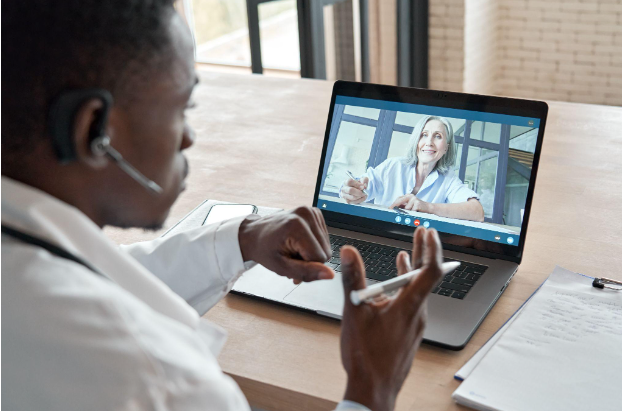
Why Purpose Built Telemedicine Is Outperforming the Platforms That Digitized the Status Quo
The first generation of telemedicine platforms solved a simple problem: they put a doctor on a screen instead of in a room. The technology was video conferencing adapted for clinical use. The workflow replicated the in person visit: schedule, wait, consult, prescribe. The business model mirrored the clinic: charge for the visit, mark up the prescription, add fees for ancillary services. The innovation was the screen. Everything behind it was the same system wearing a digital costume.
This approach worked well enough during the pandemic, when the alternative was no care at all. It has proven insufficient for the post pandemic market, where patients have developed specific expectations about what virtual care should deliver: immediate access, transparent pricing, specialist availability, and a consultation experience that takes advantage of digital infrastructure rather than being constrained by clinical conventions designed for physical spaces.
The platforms that are meeting these expectations share a common architectural decision: they were built for virtual delivery from the ground up rather than adapted from systems designed for in person care. The distinction sounds subtle. The performance gap it produces is not.
What Purpose Built Means
The difference between an adapted telemedicine platform and a purpose built one is visible at every layer of the technology stack.
At the video layer, adapted platforms use commercial video conferencing tools, Zoom, WebRTC implementations, or white labeled third party services, that were designed for business meetings and modified for clinical use. These tools perform well on fast, stable connections. They degrade rapidly on slow or variable connections, which is precisely the condition faced by the patients with the greatest need for virtual care: rural populations, elderly patients on older devices, and individuals in areas with limited broadband infrastructure.
SeeDoc, a telemedicine platform now operating from its Cambridge, Massachusetts headquarters, engineered its video consultation system specifically for unreliable network conditions. The platform’s adaptive streaming technology adjusts video quality dynamically based on available bandwidth, maintaining consultation continuity at connection speeds that would cause adapted platforms to freeze or disconnect. The technology was originally built for emerging market conditions where stable broadband was the exception rather than the rule. In the American market, it serves the same function for the estimated 80 million patients living in areas where broadband access remains inconsistent.
At the diagnostic layer, most telemedicine platforms rely entirely on the physician’s clinical judgment during the consultation, which is the same model used in person. SeeDoc’s AI assisted diagnosis system augments the physician’s assessment by surfacing relevant clinical considerations based on patient symptoms, medical history, and demographic data in real time during the consultation. The system does not replace clinical judgment. It supplements it with pattern recognition trained on hundreds of thousands of prior consultations, reducing the probability of missed diagnoses and improving the efficiency of the clinical encounter.
At the pricing layer, adapted platforms typically replicate the opacity of in person healthcare: the consultation fee is visible, but the total cost of care, including prescriptions, lab work, and follow up, is discovered after the fact. SeeDoc’s transparency calculator publishes the full cost of care before the patient books, including a zero margin policy on medicines and lab tests that eliminates the intermediary markup most platforms charge on prescription fulfillment and diagnostic services.
The Access Architecture
The most consequential difference between adapted and purpose built telemedicine is in who the platform can actually serve. Adapted platforms work best for patients who already have good healthcare access and are choosing virtual care as a convenience. Purpose built platforms work for patients who have no other option.
SeeDoc’s service model covers 50 plus medical specialties available 24/7 via video consultation, a free doctor Q&A service for patients who need clinical guidance but not a full appointment, and same day medicine delivery through pharmacy partnerships at zero markup. The model is designed to function as a complete healthcare access point for patients who may not have a primary care physician, who cannot reach a specialist within a reasonable distance, or who have avoided care because they could not predict what it would cost.
The free Q&A service is a particularly notable feature. Most telemedicine platforms require a paid consultation for any clinical interaction. SeeDoc allows patients to submit health questions and receive answers from board certified physicians at no charge, creating a low friction entry point that addresses one of the most common reasons people delay care: uncertainty about whether their concern warrants a doctor visit.
For the patient in a healthcare shortage area who is not sure whether their symptoms are serious enough to justify a consultation, the ability to ask a doctor for free and receive a clinical response within hours is not a convenience feature. It is an access bridge that most platforms do not provide.
The Economics of Transparency
SeeDoc’s zero margin model on medicines and lab tests warrants specific examination because it challenges the revenue architecture that most telemedicine platforms depend on. The standard model treats prescription fulfillment and diagnostic services as profit centers: the platform marks up the prescription, adds a service fee for lab coordination, and generates revenue beyond the consultation itself.
SeeDoc eliminated this revenue stream entirely. Prescriptions are fulfilled through pharmacy partners at the actual cost. Lab tests are processed through Quest Diagnostics at the actual
price. The platform charges only for the consultation. The patient pays exactly what the medicine and the test actually cost, with no intermediary margin.
This model produces lower per patient revenue but higher patient trust and retention. In a market where surprise medical bills are the leading cause of healthcare related financial stress, a platform that publishes its full pricing before the patient commits occupies a fundamentally different competitive position than one that reveals total costs after services are rendered.
For a market entering a period where patient acquisition cost is rising and retention is becoming the primary driver of telemedicine unit economics, the transparency model may prove to be the more durable approach. The platform that patients trust is the platform they return to. And trust, in American healthcare, is built on the absence of surprises.
What the Market Needs Next
The telemedicine market does not need more platforms that replicate the in person visit on a screen. It needs infrastructure that reimagines what virtual healthcare delivery can be when it is designed for the medium rather than adapted from the one it replaced.
Purpose built platforms like seeDoc demonstrate what that infrastructure looks like: video technology that works on any connection, diagnostic augmentation that improves clinical outcomes, pricing transparency that builds trust, and an access model that reaches the patients who need virtual care most rather than the patients who need it least.
The next phase of telemedicine growth will not be driven by convenience. It will be driven by access. And the platforms that were built for access from the beginning are the ones positioned to capture it.

We create powerful, insightful content that fuels the minds of entrepreneurs and business owners, inspiring them to innovate, grow, and succeed.