Stephen Woodard Is Building Thanis, an AI Writing Feedback Tool That Helps Writers Keep Their Own Voice
Stephen Woodard Is Building Thanis, an AI Writing Feedback Tool That Helps Writers Keep Their Own Voice
Today, more than half of new articles published online are generated primarily by AI. Analyses of hundreds of thousands of fresh web pages put the share of AI-influenced content even higher, often north of 70 percent. Platforms race to produce faster, cheaper, more optimized output. The result is a flood of polished text—volumes we’ve never seen before—yet something essential feels increasingly scarce: genuine creative spark, personal voice, and the slow, sometimes frustrating work of figuring out what you actually want to say.
A prominent study in Science Advances found that while AI assistance can lift the creativity scores of individual writers (especially those who start with fewer ideas), it tends to make the overall body of work more similar, less varied, and ultimately less original as a collective. Other reports and educator surveys echo the concern: heavy reliance on generative tools is linked to weaker critical thinking, reduced ownership of ideas, and a kind of cognitive offloading that leaves writers less practiced at the deep work of synthesis and expression. Readers notice too. When they learn a piece involved heavy AI generation, they often rate it lower on authenticity and enjoyment, even if the words themselves are competent.
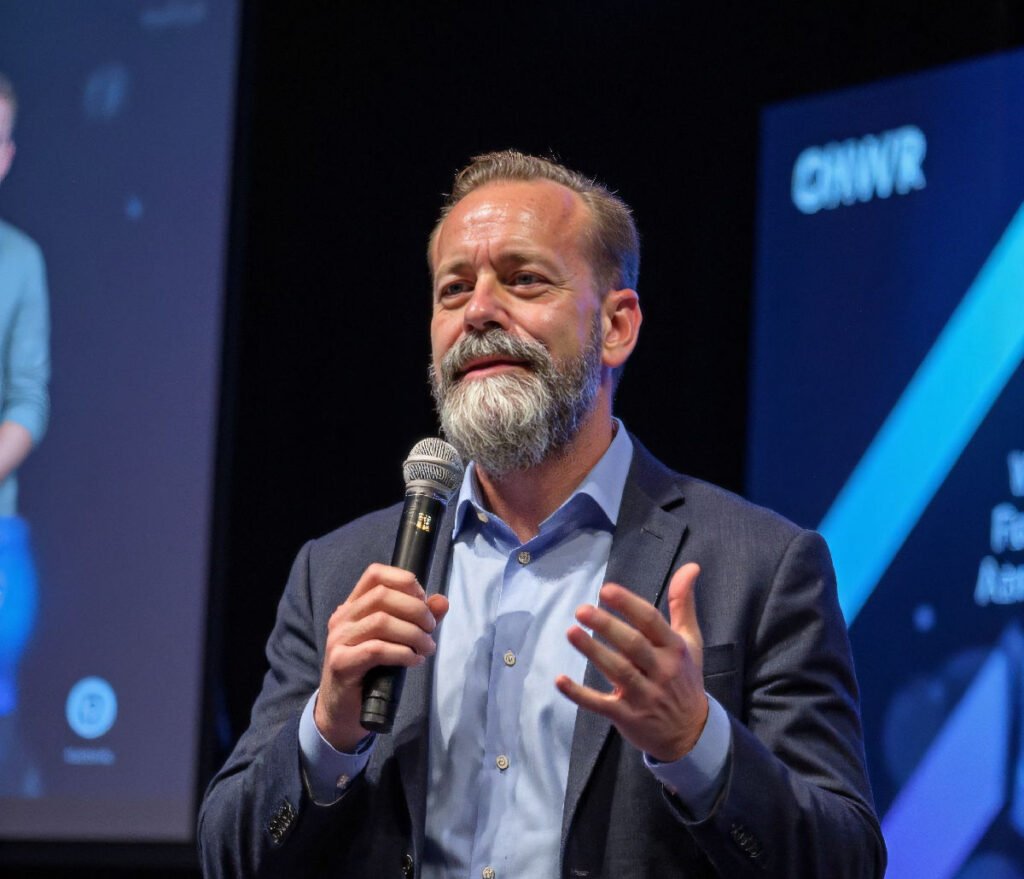
Enter Stephen Woodard, founder of Thanis. He saw this not as an abstract trend but as a quiet erosion. He saw students and young professionals growing up with tools that could finish their sentences before they’d fully formed their thoughts. And he saw a future where news, analysis, stories, and ideas—the things people turn to for understanding and connection—risk becoming smoother but shallower, more abundant but less impactful.
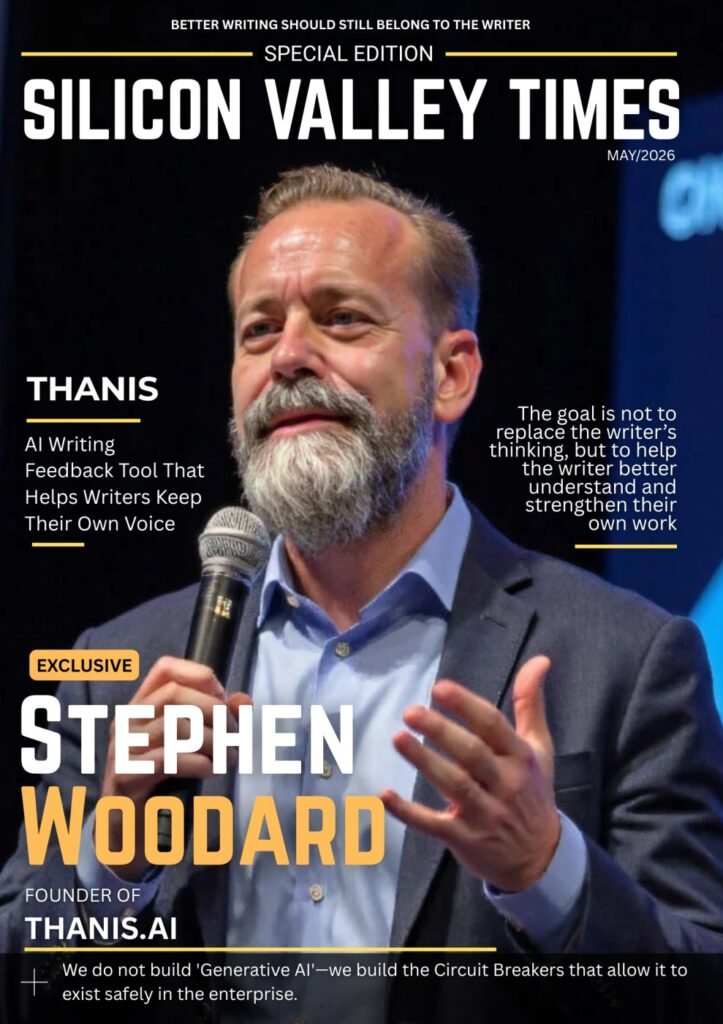
We spoke with Stephen Woodard, founder of Thanis, about how AI is changing writing and why he believes the next generation of tools should focus less on replacement and more on feedback.
1. Tell me a little bit about your background and how you ended up choosing your field.
Stephen Woodard: My background is in enterprise technology, cloud architecture, and AI strategy, and over the years I’ve spent a tremendous amount of time helping organizations modernize complicated systems, particularly around cloud transformation, automation, governance, and emerging AI technologies. But writing has always quietly existed alongside that technical world for me. Long before Thanis, I was deeply interested in language, structure, communication, and the way ideas evolve through writing itself. Over time, I started noticing that AI wasn’t just changing technology workflows, it was beginning to fundamentally change how people think, write, learn, and communicate, especially younger students and professionals who are now growing up with these tools already embedded into their everyday lives.
2. What made you take the leap into entrepreneurship?
Stephen Woodard: What really pushed me into building Thanis was a growing feeling that many AI writing tools were solving the wrong problem. Everywhere I looked, platforms were racing toward faster output, more automation, more rewriting, and more content generation, and while I absolutely believe those tools have value in certain situations, I also started seeing something quietly disappear from the writing process itself. Writing stopped becoming something people slowly worked through and started becoming something people managed after the AI had already done most of the heavy lifting. Through conversations with educators, writers, students, and professionals, I kept hearing the same underlying tension come up repeatedly. People were unsure where the line existed between assistance and replacement. That tension stayed with me for a long time, and eventually I realized I wanted to build something that moved in the opposite direction.
3. How do you differentiate yourself from others in your field?
Stephen Woodard: The biggest difference with Thanis is that it is not designed to write for you. What I see happening across a large part of the AI writing space right now is an intense focus on generation, rewriting, optimization, and automation, almost as if the ultimate goal is removing the writer from the process entirely. Thanis takes a very different approach. Instead of generating text, it analyzes writing that already exists and provides structured feedback around clarity, tone, consistency, argument flow, and revision quality. The goal is not to replace the writer’s thinking, but to help the writer better understand and strengthen their own work over time while still preserving their original voice.
4. How do you think technology will affect the way we do business 10 years from now?
Stephen Woodard: What I personally believe will happen over the next decade is that technology, particularly AI, will shift away from being viewed simply as a productivity novelty and move toward becoming something much more centered around trust, judgment, accountability, and human oversight. The first wave of AI has been heavily focused on output and automation. The next wave, at least from what I’m seeing, will revolve around whether people can actually verify, interpret, and responsibly use what these systems produce. In business environments especially, I think the companies that ultimately stand out will not necessarily be the ones producing the most AI-generated content, but the ones using AI thoughtfully to improve communication, decision-making, and human capability without completely removing critical thinking from the process.
5. What is your business all about?
Stephen Woodard: Thanis is a writing feedback platform built for students, writers, academics, and professionals who genuinely want to improve their own writing without relying on AI to completely rewrite it for them. Instead of generating full drafts, Thanis reviews what someone has already written and provides structured feedback to help them revise more thoughtfully and deliberately. At its core, the platform is built around a very simple but increasingly important idea: better writing should still belong to the writer. I believe there is a meaningful difference between helping someone think more clearly and simply generating polished text on their behalf, and that distinction is really at the center of everything we are building.
6. How can you be reached if someone is interested in your products or services?
Stephen Woodard: Anyone interested in learning more about Thanis can visit https://www.thanis.ai. I’d also recommend starting with the “What Is Thanis?” page because it gives a much deeper explanation of the philosophy behind the platform and how it works in practice: https://www.thanis.ai/what-is-thanis. I also regularly publish longer-form writing and thoughts around AI, education, writing, and technology on Medium at https://medium.com/@thanis_ai.

Sujan Pariyar is a Senior Editor at Silicon Valley Times. He has extensive experience in business, technology, and entrepreneurship journalism, with previous contributions to HuffPost, Thrive Global, Matador Network, and other international publications.
Sujan specializes in interviewing industry leaders and creating insightful, well-researched content that helps entrepreneurs and business professionals navigate innovation, growth, and strategic challenges. His writing focuses on delivering clear, substantive perspectives that inform and support decision-making in today’s dynamic business environment.