Costa Rica Budget Travel Guide 2026 – Real Daily Costs, Money Hacks & How Much You’ll Actually Spend
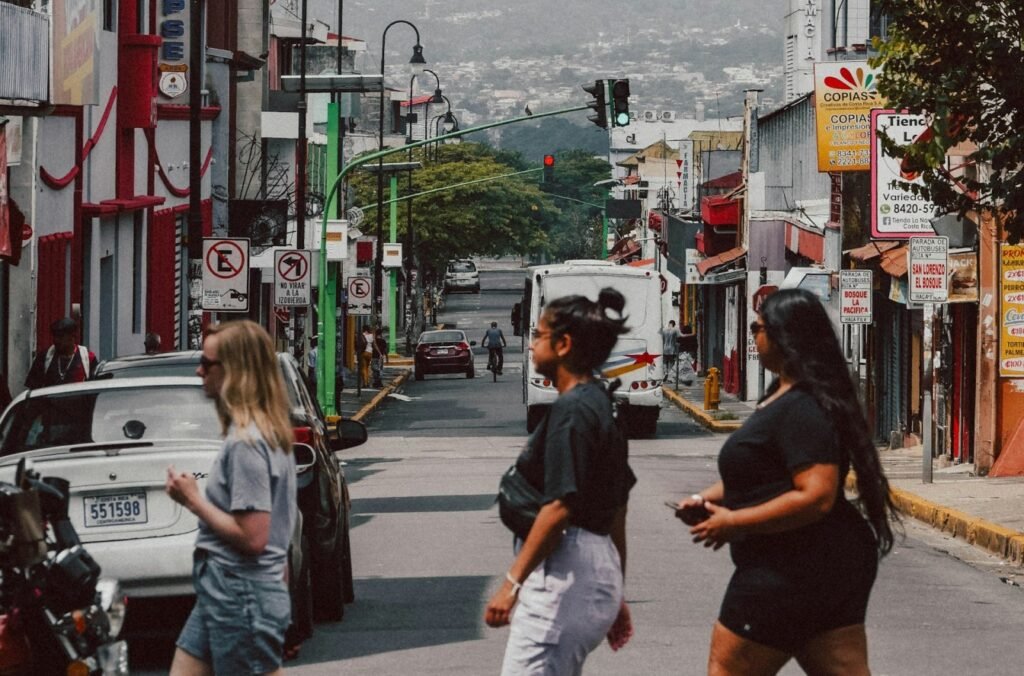
Costa Rica Budget Travel Guide 2026 - Real Daily Costs, Money Hacks & How Much You'll Actually Spend
Last updated: April 2026. Real numbers — not estimates from 2019.
Costa Rica has earned a reputation as one of the most expensive destinations in Central America, and in 2026 that reputation is well-founded. The country is genuinely pricier than Guatemala, Nicaragua, or Panama. But “expensive” is relative — and with the right timing and strategy, Costa Rica is absolutely manageable even on a tight budget.
This guide gives you real 2026 numbers across three budget tiers: backpacker, mid-range, and comfort/luxury. It also covers the money strategies that consistently deliver the biggest savings — because understanding when you go is the single most powerful cost lever available. For the complete timing picture, the Best Time to Visit Costa Rica 2026 guide is your starting point.
The Single Most Important Budget Fact: Season Determines Everything
Before any specific cost breakdown, understand this fundamental principle: the difference between visiting in the dry season (December–April) and the green season (May–November) can save you 30–50% on the exact same trip.
The same eco-lodge that charges $320/night in January will list for $160–200 in October. The same guided tour costs the same, but the accommodation around it drops dramatically. Flights follow a similar pattern.
If budget is your primary constraint, the Costa Rica Rainy Season guide explains why the green season is not a sacrifice — and the July veranillo window (covered in our July & August guide) represents the best weather-to-price ratio of the entire year.
For peak dry season travel, the Costa Rica Dry Season guide covers how to minimize costs even when prices are at their highest.
Daily Budget Breakdown by Travel Style (2026 Figures)
All figures are per person per day, in USD, based on typical 2026 prices.
Backpacker Budget: $45–75 per person per day
At the budget end, Costa Rica rewards resourceful travelers. The backbone of a backpacker trip is the country’s network of hostels, local sodas (family-run restaurants), and public bus network.
Accommodation: $15–30/night Dorm beds in quality hostels in major tourist hubs (San José, La Fortuna, Manuel Antonio, Puerto Viejo) run $15–25/night. Private rooms in budget guesthouses range from $25–45/night. Selina operates well-designed hostels in several locations with good amenities.
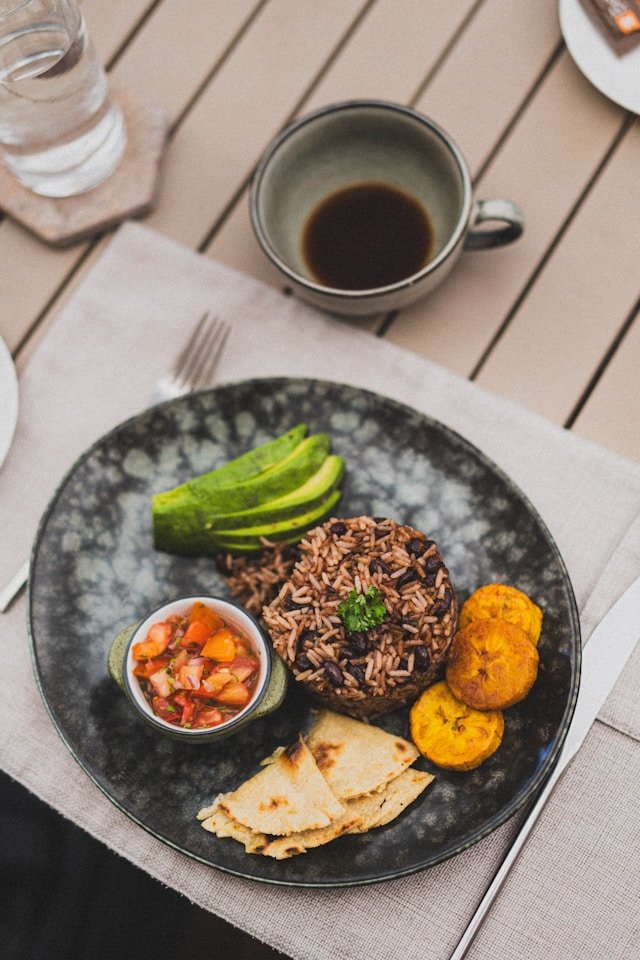
Food: $15–25/day Eating at sodas — the local family restaurants that serve a casado (rice, beans, protein, salad, plantains) for $5–8 — is the cornerstone of budget eating in Costa Rica. A full breakfast from a local café runs $3–5. Street food, fruit stands, and grocery store lunches keep costs manageable. Budget $5–8 per meal at a soda, more at tourist-facing restaurants.
Transport: $5–15/day Costa Rica’s public bus network connects major destinations at low cost. San José to La Fortuna: ~$4. San José to Puerto Viejo: ~$9. San José to Tamarindo: ~$7. Buses are slow by international standards but reliable, air-conditioned, and the most authentic way to experience the country.
Activities: $10–30/day National park entry fees typically run $17–22 per person (Tortuguero: $17, Manuel Antonio: $22, Corcovado: $20 + required guide). Free activities include beach access, town exploration, most viewpoints, and some wildlife watching. Budget for 1–2 paid activities per week.
Backpacker total: $45–75/day (green season); $60–90/day (dry season)
Mid-Range Budget: $120–200 per person per day
Most international tourists fall into the mid-range category — private rooms, a rental car or shuttle service, restaurant meals, and a mix of guided tours and independent activity.
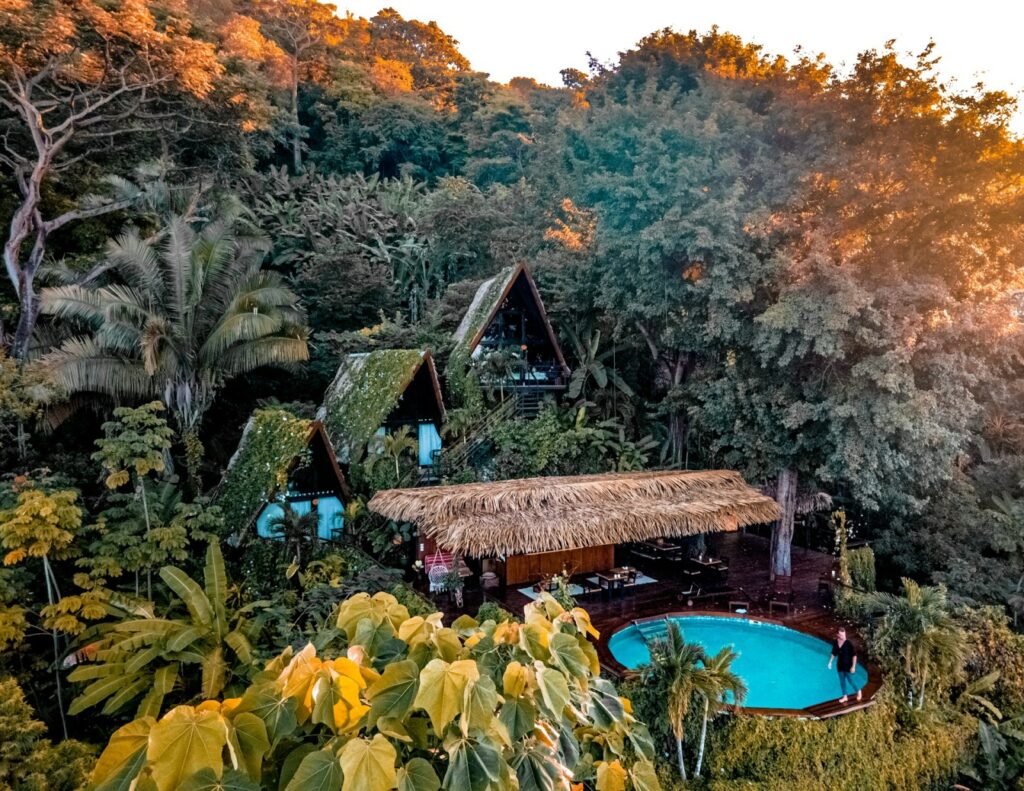
Accommodation: $60–120/night Mid-range hotels and boutique lodges — clean private rooms with AC, hot water, and often a pool — are widely available. In Arenal, options like Lost Iguana or Essence Arenal run $80–130/night in green season, $130–200 in dry season. Eco-lodges in Monteverde and on the Osa Peninsula in this range offer excellent value.
Food: $30–55/day A mix of local sodas for lunch and mid-range restaurants for dinner. Costa Rica has an increasingly sophisticated food scene in tourist areas — expect $12–25 for a main course at a restaurant, $8–15 for a full soda lunch. Budget $8–12 for breakfast, $10–15 for lunch, $20–30 for dinner with drinks.
Transport: $25–50/day Shared shuttle services (run by companies like Interbus and Grayline) connect major tourist hubs comfortably for $20–50 per route. Rental cars for mid-range travelers add $35–55/day for a basic 4×4 plus fuel. Driving yourself gives maximum flexibility and is the most efficient way to see multiple regions.
Activities: $40–80/day Guided zip-lining at Monteverde: $75–95. Whale watching tour: $90–110. White-water rafting on the Pacuare: $90–120. National park entry: $17–22. A day with one major guided activity plus a park visit runs $100–130 all-in.
Mid-range total: $120–200/day (green season); $160–260/day (dry season)
Comfort/Luxury Budget: $300–600+ per person per day
Costa Rica’s luxury eco-lodge sector is genuinely world-class. Properties like Nayara Springs (Arenal), Lapa Rios (Osa), and Pacuare Lodge (Turrialba river) represent some of the finest eco-luxury experiences anywhere on Earth.
Accommodation: $200–600+/night Top-tier eco-lodges include meals, guided tours, transport, and exclusive wildlife access in their rates. Lapa Rios on the Osa Peninsula starts around $450/night all-inclusive. Nayara Springs (individual plunge-pool villas at Arenal) runs $600–900/night in peak season. Private villa rentals in Guanacaste start around $300/night.
Food: $60–100+/day Premium restaurants, craft cocktails, and fine dining. Many luxury lodges include all meals — factor this when comparing apparent accommodation rates.
Transport: $80–200/day Private transfers, domestic flights (La Fortuna, Quepos, and Palmar Sur all have regional airports served by SANSA Airlines), and premium rental vehicles.
Activities: $100–300/day Private wildlife guides, private boat charters, customized itineraries. Exclusive overnight stays inside Corcovado or along the Pacuare River.
Luxury total: $300–600+/day regardless of season (though green season remains 20–30% cheaper even at luxury tier).

The Biggest Money-Saving Strategies
Travel in May, June, or November. These three months offer the best combination of reasonable weather and green season pricing. Hotel rates are 30–40% below January–March. Flights are cheaper. Tour availability is better than September–October, and the weather — while not dry season perfect — is very manageable for a smart itinerary.
Book package accommodation early. Eco-lodges that include meals and tours in their nightly rate often appear more expensive but work out cheaper than paying everything separately. A $250/night all-inclusive jungle lodge that covers 3 meals and a daily guided tour frequently beats a $130/night hotel where you pay $60 in meals and $90 in tours separately.
Use Liberia Airport (LIR) for Guanacaste. Flying into San José and shuttling to Guanacaste adds $50–80 in transport and 4–5 hours of travel time. Direct flights from major US cities to Liberia exist on American, United, Delta, and Southwest during peak season.
Cook some of your own meals. Most vacation rentals and many guesthouses have kitchen access. A supermarket grocery run for breakfast and lunch ingredients costs $10–15 and replaces $40–60 in restaurant spending per day.
Rent a car rather than relying on shuttles. For trips covering 3+ destinations, a rental car (total cost $300–400 for 7 days for a basic 4×4 including insurance) is cheaper and far more flexible than paying $25–50 per shuttle leg. The independence also lets you reach cheaper accommodation options outside the main tourist centers.
Pre-book national parks. Manuel Antonio, Corcovado, Chirripó, and Tortuguero all have visitor limits and require advance booking. Arriving without a reservation risks being turned away entirely — wasting transportation costs. Most parks now offer online booking.
Avoid the minibar. Imported alcohol and drinks at resort hotels in Costa Rica are extraordinarily marked up. A bottle of Imperial beer ($1.50 at a supermarket) costs $7–9 at a beachfront hotel. Local guaro (sugarcane spirit) and Costa Rican rum are good and affordable alternatives.
Costa Rica vs. the Region: Is It Worth the Price?
Compared to its Central American neighbors, Costa Rica is unquestionably more expensive. Guatemala can be done well at $40/day; Costa Rica at the same quality level costs $90+. But the comparison is somewhat misleading.
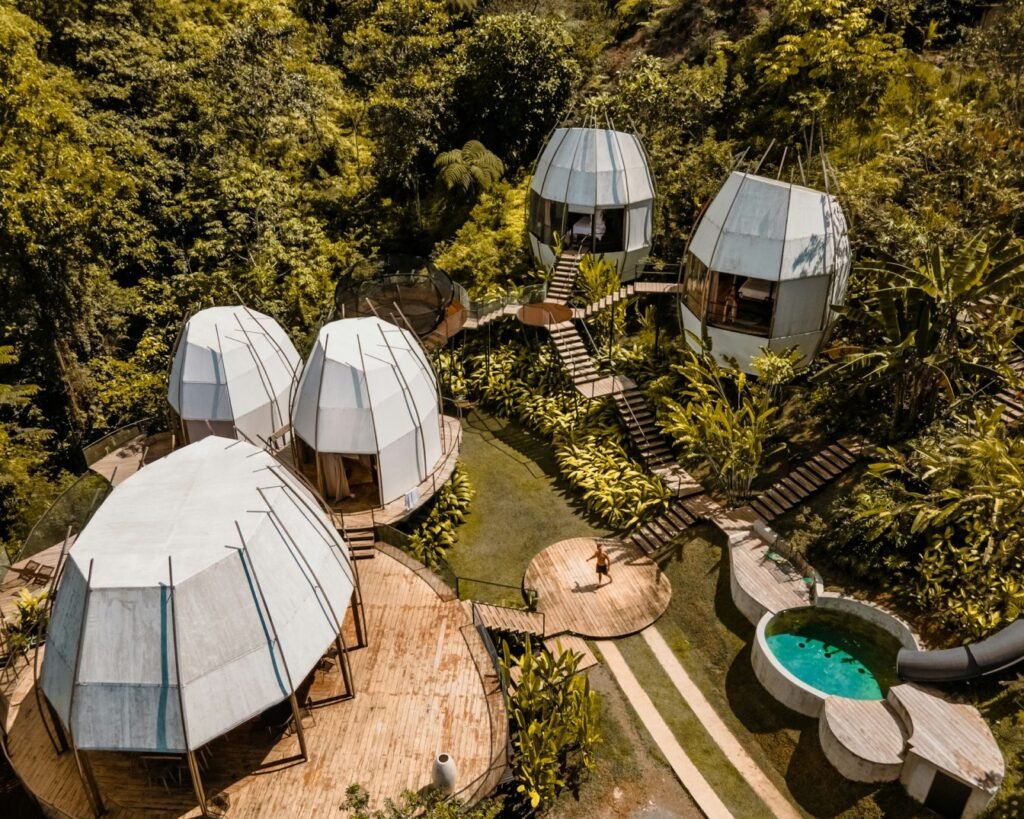
Costa Rica offers: nearly 25% of its land protected as national parks and reserves; a stable democracy and one of the highest safety ratings in Central America; world-class eco-lodge infrastructure; an English-speaking tourist sector; excellent road quality on main highways; and genuinely extraordinary wildlife density. The premium is real — and so is what you get for it.
The better question is not whether Costa Rica is expensive, but whether the experience justifies the cost. For most travelers, it does. The key is matching your budget tier to your travel style rather than trying to live like a backpacker in a mid-range destination.
What you pack also significantly affects costs — a complete equipment list with cost considerations is available in our Costa Rica Packing List 2026.
A Note on Currency and Payments
Costa Rica’s official currency is the Costa Rican colón (₡), but US dollars are widely accepted across virtually all tourist transactions. Most hotels, tour operators, and restaurants in tourist areas price in USD and accept USD directly. ATMs in cities and major tourist areas dispense both colones and dollars.
Credit cards (Visa and Mastercard) are widely accepted in tourist areas. American Express less so. Always carry some cash — smaller sodas, local buses, national park entry, and tips all typically require cash. Carrying $50–100 in USD cash is advisable at all times.
Use a no-foreign-transaction-fee credit card for purchases and a Schwab or similar no-fee debit card for ATM withdrawals. Standard bank ATM fees in Costa Rica run $3–5 per transaction plus your home bank’s international fees — these add up quickly over a 2-week trip.
Frequently Asked Questions
For a mid-range solo traveler in the green season: approximately $840–1,400 (7 days at $120–200/day). For a couple: $1,400–2,400 sharing accommodation. Dry season adds 25–40%. Budget travelers can do a week for $315–525. Luxury travelers should budget $2,100–4,200+.
September and October are the cheapest months, with hotel rates at their annual floor — often 40–50% below January peak. May, June, and November offer good savings with better weather and more tour availability.
Yes — it is the most expensive country in Central America and pricier than most Caribbean islands for comparable accommodation. However, the wildlife experiences, eco-lodge quality, and overall safety make it a distinct value proposition.
Budget $50–100 USD in cash at all times. Use ATMs in cities to replenish. Many remote destinations (Corcovado, Tortuguero, smaller beach towns) have limited or unreliable ATM access — withdraw before entering remote areas.
A 10% service charge (servicio) is legally required to be added to all restaurant bills — check if it has already been included before adding more. Tour guides typically receive $5–15 tip per person for a half-day tour, $10–25 for a full day. Hotel staff: $1–2/night for housekeeping. Tips in USD are always welcome.

Sujan Pariyar is a passionate travel writer and digital nomad expert based in Kathmandu, Nepal. Having lived and traveled extensively while balancing remote work and volunteering projects, he brings firsthand experience to topics like work exchange programs (Worldpackers and Workaway), digital nomad visas for 2026, budget destinations, and building a location-independent lifestyle.
In addition to travel content, Sujan creates in-depth articles on business strategies, digital marketing, and entrepreneurship — helping readers turn their wanderlust into sustainable income streams. His writing style blends honest reviews, detailed comparisons, and actionable tips drawn from real trips, community interactions, and ongoing research into evolving travel policies.
Sujan has contributed to various platforms over the years and is committed to creating trustworthy, up-to-date guides that empower travelers to make informed decisions. Follow his adventures and insights as he continues to explore the world while documenting practical ways to travel smarter in 2026 and beyond.