


Last updated: April 2026. Written for travelers who are serious about Corcovado.
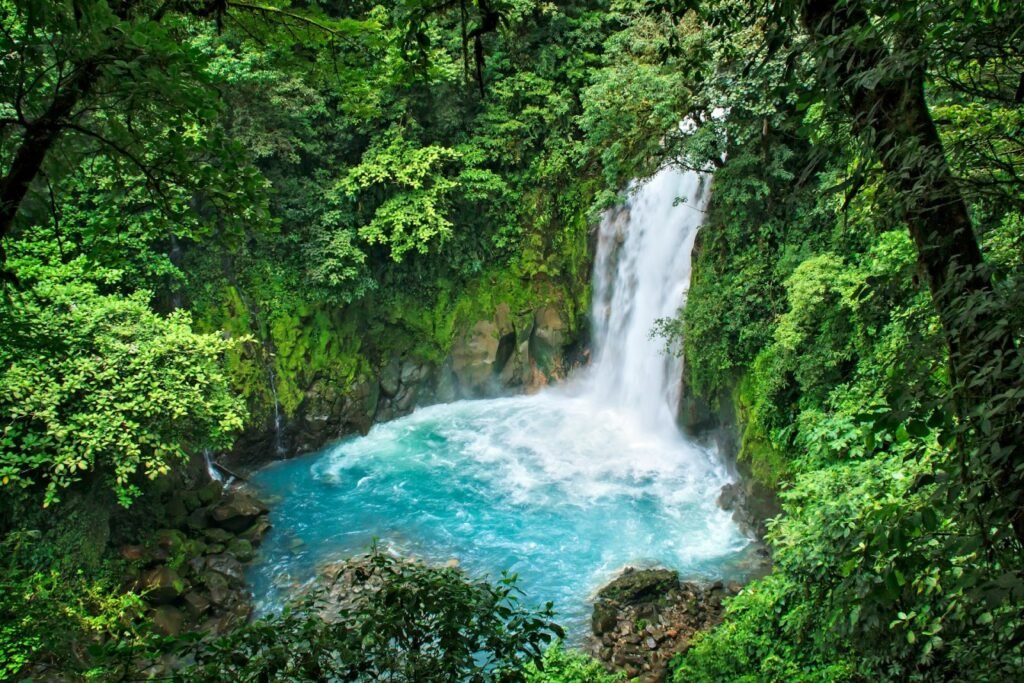
National Geographic described it as “the most biologically intense place on Earth.” After more than four decades of ecological research, that description still holds. Corcovado National Park on Costa Rica’s Osa Peninsula is not merely a forest — it is one of the last intact lowland Pacific rainforests in all of Central America, covering 424 square kilometers of terrain that remains genuinely wild.
This guide covers everything you need to plan a real Corcovado trip: how to book (the system changed in 2022 and many older guides are wrong), which station to target, what wildlife is actually realistic, how to survive the logistics of the Osa Peninsula, and why this park earns its superlatives.
Part of our Costa Rica ecological tourism series. For the full framework of sustainable travel in Costa Rica — certifications, life zones, and responsible wildlife guidelines — read the Costa Rica Ecological Tourism: 2026 Complete Guide.
Why Corcovado Is Different from Every Other Park in Costa Rica
Most Costa Rican national parks are accessible, comfortable, and visitor-ready. Corcovado is not, and that is precisely why it works ecologically. There are no paved roads inside the park boundary. There are no vendors, no WiFi, no large tour groups with identical matching rain ponchos. You enter on foot or by boat, accompanied by a certified guide who is required by law. The ranger stations are remote. The wildlife is accordingly wild.
The park protects four of Costa Rica’s five wild cat species: jaguar, puma, ocelot, and margay. It is home to all four Costa Rican monkey species occupying the same forest. Baird’s tapir — 300kg of prehistoric herbivore — browses freely along the beach at Sirena. Harpy eagles, among the world’s largest raptors, nest in the old-growth trees. The species lists run into the thousands.
This is what true primary rainforest looks like when it has been protected long enough to recover.
The Mandatory Guide Requirement: What It Means and Why
As of 2022, all visitors to Corcovado National Park must be accompanied by a certified local guide. This is not optional, not waivable, and not something to argue with at the ranger station. The guide must hold an ICT certification and must be registered with SINAC for the specific station you are entering.
This policy exists for two reasons. First, the terrain is genuinely dangerous without expertise — river crossings, wildlife proximity, and trail navigation in remote zones have resulted in serious incidents. Second, and more importantly for Costa Rica’s ecological model, the requirement directly employs the local communities of the Osa Peninsula. These are communities that historically depended on logging, hunting, and gold mining inside what is now the park. The guide economy replaced those extractive livelihoods. Your guide fee is conservation funding.
How to hire a certified guide: The Osa Conservation area guide association (Asociación de Guías y Naturalistas de la Osa) based in Puerto Jiménez is the primary booking source for independent travelers. The ICT guide registry is searchable. Most CST-certified lodges in the Puerto Jiménez or Drake Bay area can connect you with registered guides as part of their tour packages.
The Four Ranger Stations: Which One Is Right for You?
Corcovado has four main entry ranger stations, each with different character, accessibility, and wildlife profile.
| Station | Access | Wildlife Focus | Overnight? | Best For |
|---|---|---|---|---|
| Sirena | Boat from Drake Bay or 22km beach hike from La Leona | Tapir, 4 monkey species, scarlet macaw, potential jaguar | Yes (camping + dormitory) | Serious multi-day wildlife experience |
| La Leona | 45min walk from Carate trailhead (4WD vehicle or local taxi) | Beach approach, coastal wildlife, scarlet macaw | No | Day-trippers from Puerto Jiménez area |
| San Pedrillo | Boat from Drake Bay | Waterfalls, primary forest, humpback whales offshore Oct–Nov | No (park day visits) | Drake Bay-based visitors |
| Los Patos | Accessible by 4WD from La Palma village | Forest interior species, quetzal possible, less visited | No | Overland hikers approaching Sirena |
The honest recommendation for most travelers: If you can book it (and accept the cost), aim for at least one night at Sirena Station. The 6am dawn walk from Sirena through primary forest before other visitors arrive is one of the most extraordinary wildlife experiences in Central America. Tapirs are commonly seen on the airstrip at dawn. All four monkey species can be found within a 2km radius. Night walks from Sirena reveal an entirely different nocturnal ecosystem.
How to Book Corcovado in 2026 (Step by Step)
The booking system changed in 2022 and many older travel blogs describe a process that no longer works. Here is the current system:
Step 1: Go to reservations.sinac.go.cr (SINAC’s official reservation portal). Create an account.
Step 2: Search for Corcovado National Park and select your target station and dates. Note that Sirena overnight slots are different from day visit slots.
Step 3: Pay the entrance fee online. International visitors pay $20/day. Children under 6 are free. This must be done before arrival — walk-up entry is not accepted at most stations.
Step 4: Book your certified guide separately through the Osa guide association or your lodge. The guide booking confirms that a registered guide will accompany you — SINAC may verify this at the ranger station.
Step 5: For Sirena overnight stays, book the camping or dormitory accommodation at the station through SINAC simultaneously. Capacity is extremely limited (roughly 30–40 people maximum).
Lead time: December–April peak season: book 4–8 weeks ahead minimum. July–August turtle/whale overlap: book 4–6 weeks ahead. Shoulder season (May–June, September–November): 2–4 weeks ahead is usually sufficient.
What Wildlife Is Actually Realistic
The wildlife blog landscape for Corcovado is full of “I saw a jaguar” trip reports that create wildly unrealistic expectations. Here is the honest breakdown:
Near-guaranteed with a good guide: White-faced capuchin monkeys, howler monkeys, spider monkeys, squirrel monkeys (all four species), scarlet macaws (especially near Sirena airstrip), great green macaws, multiple heron species, kingfishers, coatis, white-nosed coatis, common black hawks, and a rotating cast of antbirds.
Likely with time and luck: Baird’s tapir (Sirena airstrip at dawn — this is one of the best places on Earth for tapir viewing), peccaries (white-lipped herds are common near Sirena), giant anteater, ctenosaur and black iguana, black-and-white hawk-eagle.
Rare but possible: Puma (seen from trail in early morning occasionally), ocelot (nocturnal, occasional night walk sighting), harpy eagle (requires local guide knowledge of nest area — ask specifically).
Very rare: Jaguar. Honest probability for a single 2-day visit: under 5%. Camera trap programs document their presence; direct sighting is exceptional. If a tour operator guarantees jaguar sightings, walk away.
The Logistics of the Osa Peninsula
The Osa Peninsula has infrastructure that does not match its ecological fame. This is a feature for wildlife (limited development = habitat integrity) and a challenge for travelers.
Getting there: The most reliable options are a domestic flight from San José to Puerto Jiménez (35 minutes, operated by Sansa Airlines, roughly $100–150 one-way) or the boat-and-bus combination from Uvita to Drake Bay. Self-driving from San José takes 6–8 hours on partly unpaved roads and is not recommended for rental cars without significant 4WD clearance.
Staying: Puerto Jiménez is the main town and service hub. Drake Bay is the northern gateway, accessed by boat from Sierpe. Both have a range of accommodation from basic rooms ($20–40/night) to luxury eco-lodges ($200–600+/night). Check CST certification status before booking.
The rainy season Osa reality: May–November is rainy season on the Osa, and the roads here get genuinely challenging. The Carate road — the last 30km to the La Leona trailhead — is unpaved, river-crossed, and impassable in heavy rain even with 4WD. Local colectivo taxi drivers (collective taxis that run the Carate route from Puerto Jiménez) know the road and the river levels. Use them rather than attempting this in a rental.
Budget Breakdown for a Corcovado Trip
| Item | Cost (USD) |
|---|---|
| Domestic flight SJO–Puerto Jiménez (one-way) | $100–150 |
| Park entrance fee per day | $20 |
| Certified guide (half day) | $60–100 |
| Certified guide (full day) | $100–160 |
| Sirena station camping (per night) | $20–30 |
| Sirena station dormitory (per night) | $35–50 |
| Budget guesthouse Puerto Jiménez (per night) | $20–45 |
| Mid-range eco-lodge Puerto Jiménez (per night) | $80–180 |
| Carate colectivo taxi (Puerto Jiménez to Carate) | $20–30/person |
| Drake Bay boat transfer | $25–40/person |
| 3-day/2-night package (mid-range, guide + lodge + meals) | $450–700 |
See the Costa Rica Budget Travel Guide 2026 for a full breakdown of how Corcovado fits into different trip budget structures.
When to Go: Corcovado’s Seasonal Calendar
| Month | Conditions | Wildlife Highlights |
|---|---|---|
| December–April | Dry season — best trails, most accessible, peak prices | All species active; tapir/peccary at water |
| May–June | Transition to rainy season; manageable with guide | Quieter park, good value |
| July–August | Rainy season — trails muddy but passable; offshore whale watching | Humpback whale peak, turtle nesting begins |
| September–October | Heaviest rain; some trail closures possible | Least visited; sea turtles nesting offshore |
| November | Transition back to dry — improving conditions | Excellent birding, returning migrants |
For the relationship between rainy season conditions and ecological tourism timing, see the Costa Rica Rainy Season Guide.
FAQ: Corcovado National Park
No. Since 2022, a certified guide is mandatory for all park entry. This is enforced at ranger stations.
The beach hike from La Leona to Sirena is 22km and takes 7–8 hours in heat and humidity. It crosses tidal river mouths twice — timing is critical (must cross at low tide). This requires genuine hiking fitness. The shorter options (San Pedrillo or Drake Bay boat approach) are accessible to moderate fitness levels.
The wildlife itself is not dangerous if you behave appropriately (follow guide instructions, keep distance from peccary herds, never corner any animal). The safety risks are environmental: heat, dehydration, river crossings, and the remoteness of the location. Guides carry first aid and know emergency protocols.
Only at Sirena Station, with advance SINAC booking. Wild camping is not permitted.
Corcovado is the national park — strictly protected, no development. The Osa Peninsula is the broader geographic region surrounding it, which includes private land, buffer zones, farms, and towns. The Peninsula as a whole is an important biological corridor, but Corcovado is the protected core.
For the full ecological context of Corcovado within Costa Rica’s 29% protected land framework, the 12 life zones, and the CST certification system that governs responsible ecotourism, read our Costa Rica Ecological Tourism: The 2026 Complete Guide.


Sujan Pariyar is a Senior Editor at Silicon Valley Times. He has extensive experience in business, technology, and entrepreneurship journalism, with previous contributions to HuffPost, Thrive Global, Matador Network, and other international publications.
Sujan specializes in interviewing industry leaders and creating insightful, well-researched content that helps entrepreneurs and business professionals navigate innovation, growth, and strategic challenges. His writing focuses on delivering clear, substantive perspectives that inform and support decision-making in today’s dynamic business environment.