


Last updated: April 2026. Built for travelers who want honest wildlife expectations.
Wildlife watching in Costa Rica is extraordinary — and it is also one of the most over-promised tourism experiences on the planet. Blog posts and tour operators routinely create expectations that even experienced wildlife researchers cannot reliably meet. This guide does the opposite: it tells you exactly what you are realistically likely to see, where, when, and at what cost — so you can plan a trip that genuinely delivers.
Part of our Costa Rica ecological tourism series. For the complete framework of sustainable travel in Costa Rica — park systems, CST certification, life zones, and responsible travel guidelines — start with the Costa Rica Ecological Tourism: 2026 Complete Guide.
The Honest Wildlife Probability Matrix
This is the table that other travel blogs won’t publish because it manages expectations rather than hypes them.
| Species | Probability (Experienced Guide, Good Location) | Best Location | Best Time |
|---|---|---|---|
| Howler monkey | 95%+ | Anywhere with forest | Morning (loud calls) |
| White-faced capuchin | 90%+ | Manuel Antonio, Cahuita, Corcovado | Morning |
| Three-toed sloth | 85%+ | Manuel Antonio, Puerto Viejo, Cahuita | Cecropia trees, daytime |
| Scarlet macaw | 80%+ | Carara, Manuel Antonio, Corcovado | Dawn flight to feeding trees |
| Spider monkey | 70% (coastal forest) | Manuel Antonio, Corcovado | Morning, canopy |
| Squirrel monkey | 65% (specific areas only) | Manuel Antonio south end, Corcovado | Morning, fruiting trees |
| Resplendent quetzal | 70% (Jan–May, right zone) | Monteverde, Cerro de la Muerte | Dawn walk, Jan–May only |
| Baird’s tapir | 50% (Sirena station, dawn) | Corcovado (Sirena) | Dawn, airstrip area |
| Sea turtle nesting | 90%+ (Jul–Oct, Tortuguero) | Tortuguero NP | Night ranger tour, Jul–Oct |
| Humpback whale | 80%+ (right season) | Uvita (Ballena Marine NP) | Jul–Nov; Dec–Apr (N. population) |
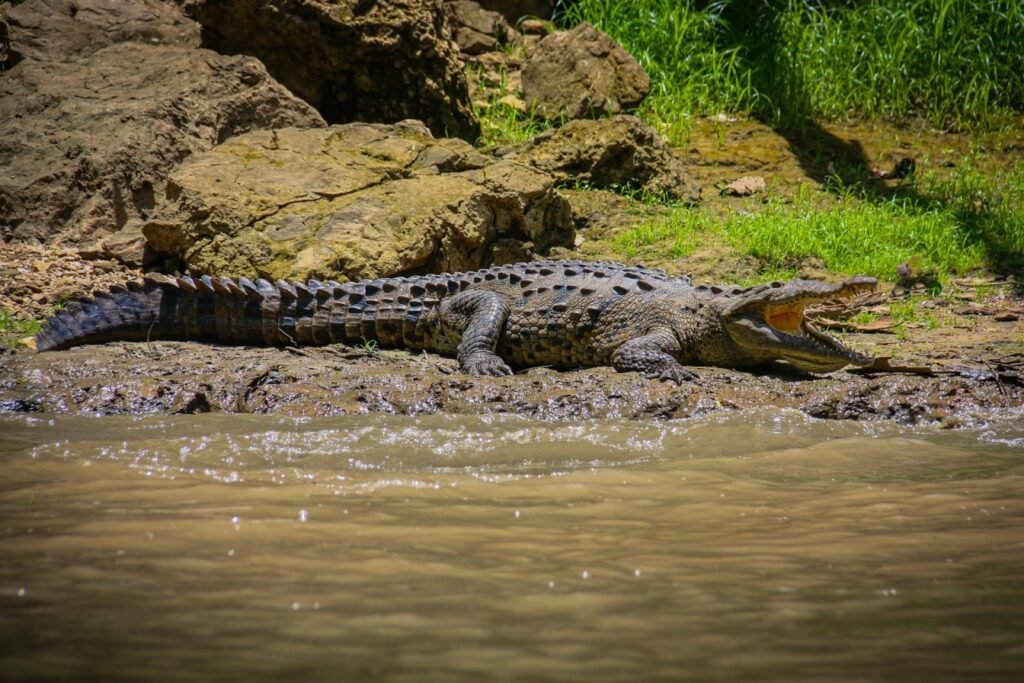
| American crocodile | 85%+ (Tárcoles River) | Río Tárcoles bridge, Palo Verde | Year-round |
| Caiman | 70%+ (Tortuguero canals) | Tortuguero, Caño Negro | Night boat tour |
| Green iguana | 90%+ (lowland areas) | Tortuguero, Pacific lowlands | Year-round |
| Poison dart frog (multiple species) | 85% (wet forest floor) | Corcovado, Caribbean lowlands, Monteverde | Morning, low vegetation |
| Glass frog | 60% (night walk, stream habitat) | Monteverde, La Selva | Night walk, rainy season |
| Great green macaw | 30–40% | Tortuguero, Sarapiquí | Breeding season, Jan–Jun |
| Puma | 15% (Corcovado, experienced guide) | Corcovado, Chirripó | Pre-dawn, remote areas |
| Ocelot | 10% (night walk, specific areas) | Corcovado, Tortuguero | Night walk |
| Jaguar | 3–5% (multi-day Corcovado stay) | Corcovado deep zones | No reliable prediction |
| Giant anteater | 25% (right habitat) | Corcovado, Caño Negro, Santa Rosa | Dawn/dusk, open areas |
The 7 Best Wildlife Watching Experiences in Costa Rica
1. Sea Turtle Nesting at Tortuguero (July–October)
Nothing in Costa Rica’s wildlife portfolio compares to watching an ancient green sea turtle haul herself onto a dark Caribbean beach, excavate a nest with her rear flippers, and deposit 80–120 eggs in a single focused effort. Tortuguero is the most important Atlantic green turtle nesting beach in the Western Hemisphere, with an estimated 40,000–50,000 nesting events per year in peak season.
Ranger-supervised night tours (absolutely mandatory — unauthorized beach access is illegal and disturbs nesting) run from roughly 8pm to midnight. Small groups of 8–15 with a trained guide wait patiently in designated areas until a nesting female is located. The experience is intimate, quiet, and humbling.
Booking: Through licensed operators based in Tortuguero village. The Sea Turtle Conservancy’s naturalist night tours are the highest-quality option and the most directly conservation-linked.
2. Quetzal Dawn Walk in Monteverde (January–May)
The resplendent quetzal was revered as sacred by the Maya and Aztec. The male’s tail streamers — up to 65cm long — and iridescent plumage make it arguably the most visually spectacular bird in the Americas. Monteverde is one of the most reliable quetzal viewing locations in the world during breeding season (January–May), when males display from exposed perches at dawn.
Dawn walks (starting 5:00–5:30am) with a specialist birding guide at the Monteverde Cloud Forest Reserve or Curi-Cancha Reserve (less crowded, excellent quetzal record) are the primary method. The fruiting avocado trees (Lauraceae family) that quetzals depend on are known to guides who track them daily.
Key detail: The quetzal season ends abruptly in late May as breeding concludes. June visitors will not see this experience. Plan deliberately.
3. Tapir at Sirena (Year-Round, Best Dec–Apr)
Sirena Station’s airstrip in the heart of Corcovado is the best place on Earth to see Baird’s tapir — a 200–300kg prehistoric-looking mammal that resembles a cross between a horse and an oversized pig and is one of the oldest surviving mammal lineages. The Sirena airstrip’s short grass attracts tapirs at dawn for grazing, and with patient waiting (arrive before 5:30am), encounters are extraordinarily common by tapir standards.
The tapir’s relative indifference to observers, its extraordinary size, and its improbable body plan make it one of the most memorable large mammal encounters in the hemisphere.
4. Humpback Whale Watching at Uvita (July–November)
Uvita’s Ballena Marine National Park — named for the whale (ballena) and shaped by a natural rock formation that resembles a whale’s tail — hosts one of the world’s most remarkable humpback whale concentrations. Two distinct populations overlap here: North Pacific humpbacks (December–April) and South Pacific humpbacks (July–November), giving Uvita the longest humpback whale season of any site in the world.
Mothers with calves, competitive groups of males, and occasional full breach sequences are all reliably observed on half-day tours from Uvita’s dock. The park’s protected marine status keeps boat pressure lower than in open-water whale watching destinations.
5. Canopy Wildlife at Manuel Antonio (Year-Round)
Manuel Antonio’s extraordinary wildlife density in a small, well-staffed park makes it the best place in Costa Rica for the “first wildlife experience” — multiple charismatic species at close range, with expert guides who know every sloth tree and monkey troop. The biological explanation is the park’s small size and the long history of wildlife research that has made its animals more habituated to observer presence (without the feeding habituation problem that reduces natural behavior).
For the best experience: arrive at gate opening (7am), hire a certified local guide at the entrance (they are available and legitimate there), and head immediately to the park’s western end before large tour groups arrive.
6. Caiman Night Tour in Tortuguero Canals
Night boat tours through Tortuguero’s canal system reveal the Caribbean rainforest’s nocturnal face: spectacled caimans glowing red-eyed in the torch light, sleeping iguanas gripping branches over black water, Jesus Christ lizards (basilisks) on low vegetation, and the extraordinary soundscape of a nighttime tropical forest. Guides spotlight sleeping birds — dozens of species perched within arm’s reach — and explain the ecological relationships of the canal ecosystem.
The night canal tour is among the most accessible high-impact wildlife experiences in Costa Rica — no serious hiking required, no early morning drive, no lottery booking system. Simply arrive in Tortuguero.
7. Birding at La Selva Biological Station (Year-Round)
La Selva, operated by the Organization for Tropical Studies in the Sarapiquí region, is a world-famous field biology station that has been the site of more tropical ecology research papers than any other location in the Western Hemisphere. Its trail system passes through primary and secondary forest, cacao plantation, and river margins — creating habitats for over 500 bird species.
La Selva accepts day visitors and offers overnight accommodation (book through OTS’s online system). A guided morning walk here with an OTS staff naturalist is a genuinely scientific experience: the guides can explain not just what you are looking at but the ecological mechanisms behind the species’ presence, behavior, and relationship to the La Selva research ecosystem.
Wildlife Ethics: What Every Visitor Must Know
The Sloth Sanctuary Problem
Costa Rica has dozens of “sloth sanctuaries” and “sloth encounters” that allow visitors to hold, touch, or be photographed with sloths. The scientific consensus is that this causes significant stress to the animals — cortisol levels in sloths handled for tourist photography are documented to spike dramatically. The “smile” that sloths appear to have is anatomical, not emotional. A sloth being held for a selfie is not happy; it is stressed and unable to express that stress in ways humans recognize.
Legitimate wildlife care facilities (which exist for genuinely injured animals) do not allow visitor touching of rehabilitated sloths. If a facility’s business model centers on paid sloth photos, that is a commercial operation, not a conservation one.
The Monkey Feeding Crime
Feeding wild monkeys in Costa Rica is illegal under the Wildlife Conservation Law. It is also genuinely harmful: capuchins fed by tourists develop dietary problems from human food, lose foraging skills, become aggressive toward visitors, and in severe cases are euthanized because their behavior becomes dangerous. Every monkey bite incident in Costa Rica has a human feeding history behind it.
The Photography Distance Rule
The rule is simple and consistent across SINAC’s guidelines: maintain a minimum 5-meter distance from any wild animal. For large mammals (tapir, peccary herds, any cat species), a 20-meter minimum is safer. If an animal changes its behavior because of your presence — looks at you, moves away, stops foraging — you are too close.
Wildlife Watching by Region: Quick Reference
Caribbean Coast (Puerto Viejo, Tortuguero, Cahuita): Sea turtles (nesting Jul–Oct), caimans, manatees, river otters, great green macaws, Caribbean reef wildlife, sloths on coastal trees, Bribri forest species. For the full coastal comparison, see our Caribbean vs Pacific Coast guide.
Pacific Coast — Osa Peninsula: All four monkey species, tapir, scarlet macaw, harpy eagle, big cats (low probability), whale watching offshore (Jul–Nov), dolphins.
Pacific Coast — Manuel Antonio/Carara: Capuchins, howlers, sloths, squirrel monkeys (Manuel Antonio south), scarlet macaws (Carara is one of the most reliable locations), crocodiles at Río Tárcoles.
Monteverde Cloud Forest: Resplendent quetzal (Jan–May), three-wattled bellbird, hummingbirds (15+ species), glass frogs (night walks), all cloud forest specialties.
Arenal/La Fortuna: Poison dart frogs, fer-de-lance (watch trail edges), Montezuma oropendola, bull sharks (yes — in Lake Arenal’s feeder rivers), caimans in lake margins.
Guanacaste/dry forest: White-tailed deer, white-faced capuchins, howlers, collared peccary, great curassow, seasonal raptors, dry-season waterbird concentrations at Palo Verde.
FAQ: Costa Rica Wildlife Watching
Subjectively, Tortuguero’s sea turtle nesting (July–October) or the quetzal dawn walk in Monteverde (January–May). Objectively by biodiversity density, a multi-day stay at Corcovado’s Sirena Station.
In some parks (Manuel Antonio has a self-guided trail, Cahuita’s beach trail is accessible without a guide), yes — but a certified naturalist guide will show you 3–5 times more species in the same time. Wildlife spotting is a practiced skill; what looks like an empty forest to an untrained eye contains dozens of species to a trained one.
Monkeys, sloths, crocodiles, iguanas, toucans, trogons, and most forest bird species are present year-round. Sea turtles, quetzals, and migratory birds are seasonal.
Exceptional. With 940+ species in a country roughly the size of West Virginia, the bird density is extraordinary. Serious birders target La Selva (Sarapiquí), Cerro de la Muerte (quetzal + highlands), Carara (scarlet macaw + Tarcoles river), and Corcovado as the highest-priority sites.
For how seasonal timing affects wildlife availability, see our Best Time to Visit Costa Rica 2026. For the full ecological tourism framework, return to the Costa Rica Ecological Tourism guide.


Sujan Pariyar is a Senior Editor at Silicon Valley Times. He has extensive experience in business, technology, and entrepreneurship journalism, with previous contributions to HuffPost, Thrive Global, Matador Network, and other international publications.
Sujan specializes in interviewing industry leaders and creating insightful, well-researched content that helps entrepreneurs and business professionals navigate innovation, growth, and strategic challenges. His writing focuses on delivering clear, substantive perspectives that inform and support decision-making in today’s dynamic business environment.