


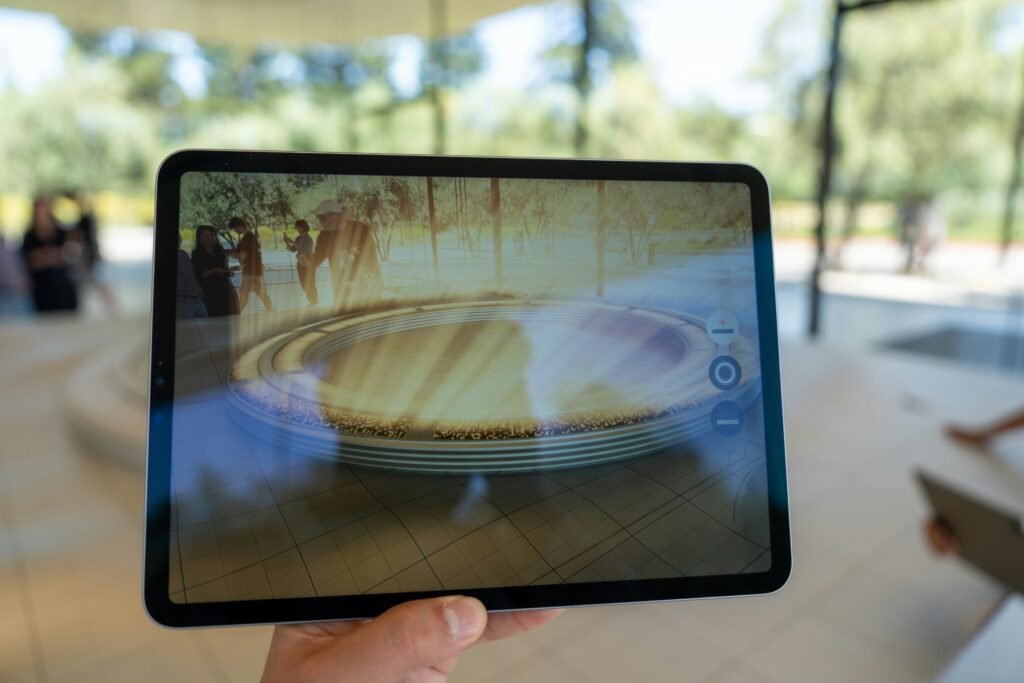
Introduction to Augmented Reality and Scene Generation
Augmented reality (AR) is a transformative technology that overlays digital information onto the physical world, enhancing user experiences across various domains. By seamlessly blending virtual objects with real-world environments, AR facilitates interactive visualizations that can aid in numerous applications including education, entertainment, healthcare, and urban planning. The integration of virtual elements in a user’s physical surroundings provides a powerful tool for communication and engagement.
Scene generation, on the other hand, refers to the process of creating visual content, whether in two-dimensional (2D) or three-dimensional (3D) formats. This technology can generate a variety of environments, from realistic landscapes to imaginative structures, serving crucial roles in gaming, simulations, and visual arts. By leveraging large foundation models, scene generation becomes increasingly sophisticated, able to craft intricate details and dynamic interactions that resonate more deeply with users.
The significance of augmented reality in scene generation lies in its potential to modify the way we perceive and interact with our surroundings. For instance, in architectural design, AR allows stakeholders to visualize proposed structures in their actual locations, facilitating better decision-making processes. Furthermore, as AR technologies evolve, they are increasingly relying on advanced machine learning techniques to improve the realism and context-awareness of generated scenes.
This collaborative synergy between augmented reality and scene generation fosters innovative applications that harness the power of large foundation models. These models, capable of understanding and generating vast amounts of data, pave the way for more immersive and personalized AR experiences. As we delve deeper into the ARK approach, the exploration of how these technologies coalesce will offer valuable insights into their impact and future possibilities.
Understanding the ARK Approach
The ARK augmented reality method represents a significant advancement in the field of scene generation, particularly in the utilization of large foundation models. This innovative approach focuses on blending augmented reality (AR) with sophisticated algorithms to create immersive 2D and 3D scenes that are both dynamic and interactive. At its core, the ARK framework is designed to achieve seamless integration of virtual elements within physical environments, enhancing user experience and engagement.
One of the standout features of the ARK approach is its capacity to leverage large foundation models, which significantly elevate the quality of scene generation. These models are trained on extensive datasets, allowing them to possess a broad understanding of real-world context, objects, and interactions. As a result, ARK can generate context-aware scenes that are not only visually appealing but also functionally realistic, setting itself apart from traditional scene generation methods.
In addition to its foundation models, the ARK methodology employs advanced computer vision techniques and machine learning algorithms that facilitate real-time tracking and rendering. By interpreting user movements and environmental parameters, ARK can adapt the generated scene instantaneously, offering a fluid interaction that is often lacking in conventional methods. This adaptability is crucial for applications in various fields, from gaming to education and training simulations.
Moreover, the ARK approach emphasizes collaboration among users in augmented environments, introducing a social dimension to 2D/3D scene generation. Users can interact with virtual objects and with one another, fostering cooperative experiences that enhance learning and creativity. Overall, the ARK approach redefines the boundaries of augmented reality applications, providing a robust framework for generating immersive 2D and 3D scenes that resonate with users on multiple levels.
The Role of Large Foundation Models in Scene Generation
Large foundation models, often referred to as large-scale neural networks, have emerged as pivotal tools in various fields, including natural language processing and computer vision. These models, trained on vast amounts of data, possess the ability to generate high-quality, intricate content, making them indispensable in the context of scene generation. When paired with ARK augmented reality technologies, the potential for generating realistic 2D and 3D scenes dramatically increases.
The primary advantage of large foundation models lies in their capacity for understanding and producing contextually relevant content. By leveraging the power of deep learning, these models can synthesize scenes that reflect a nuanced understanding of spatial relationships, lighting, and object behavior. This capability aligns seamlessly with the requirements of ARK augmented reality, where the realism of generated environments is crucial for immersion. Without the addition of these sophisticated models, scene generation may fall flat, lacking the intricate details that make environments compelling.
Moreover, large foundation models can adapt to various stylistic and contextual requirements, enabling the creation of diverse scenes tailored to specific applications. For instance, in gaming or architectural visualization, the need for strikingly realistic environments can be met through the application of these models in conjunction with ARK augmented reality techniques. This integration facilitates a feedback loop where user interactions can refine the scene generation process, continuously improving the quality of visual outputs.
As the field of scene generation evolves, the synergy between large foundation models and ARK augmented reality will undoubtedly play a critical role. Their combined capabilities offer a promising avenue for enhancing the realism and interactivity of generated scenes, resulting in enriched user experiences across various platforms. Emphasizing the importance of these models, it becomes evident that they are not just supplemental tools but essential components of advanced scene generation frameworks.
Methodology of Integrating ARK with Large Foundation Models
The integration of ARK augmented reality with large foundation models aims to enhance the generation and rendering of 2D and 3D scenes. This methodology revolves around a multi-step process that combines the strengths of ARK’s immersive capabilities with the computational power of large foundation models. The first step in this integrated approach involves data collection and pre-processing. High-quality datasets consisting of diverse 2D and 3D images, along with their contextual metadata, are critical for training the foundation models.
Next, the ARK system leverages computer vision algorithms to analyze and classify these images, identifying key features that may influence scene composition and viewer interaction. This is crucial as it establishes the groundwork for training large foundation models to understand and predict scene elements efficiently. Following this, the ARK framework is employed to synthesize augmented reality experiences. This is achieved through the use of generative adversarial networks (GANs) that learn from the existing dataset, allowing for the creation of realistic augmented scenes.
Furthermore, the integration employs reinforcement learning techniques to optimize the interaction between virtual elements and real-world contexts. This iterative process ensures that the generated scenes not only appear realistic but are also contextually relevant, enhancing user engagement. Tools such as TensorFlow and PyTorch are often utilized to build and train these models, facilitating high-performance computing capabilities that are essential for processing large datasets.
Ultimately, the collaboration between ARK augmented reality and large foundation models fosters a seamless environment for generating 2D and 3D scenes that are visually and contextually coherent. By harnessing deep learning techniques, this methodology not only advances traditional scene generation methods but also sets a new standard for immersive experiences across various applications.
Case Studies: Successful Implementations of ARK and Foundation Models
In recent years, the integration of ARK augmented reality with large foundation models has transformed various industries, leading to innovative applications that enhance user experiences and operational efficiency. One notable case study involved a prominent architecture firm that utilized ARK to visualize complex building designs. By combining the firm’s large foundation model with ARK technology, architects were able to create immersive 3D representations of their projects, allowing clients to interact with designs in real-time. This not only streamlined the design approval process but also increased client satisfaction as stakeholders could better understand the spatial dynamics of their future spaces.
Another significant application was seen in the field of education. A leading technology company developed an ARK augmented reality program that integrated with large foundation models to create an interactive learning environment for students. By employing ARK, educators were capable of bringing 3D historical artifacts and complex scientific concepts to life. This hands-on experience was shown to significantly boost student engagement and retention rates, illustrating the potential of ARK augmented reality to complement traditional teaching methods effectively.
In the healthcare sector, a medical startup implemented ARK alongside large foundation models to enhance surgical training. Through ARK technology, trainees could practice operations on virtual patients in a realistic 3D setting. Feedback from participants highlighted improved surgical skills and more comprehensive understanding of human anatomy. This application underscores how ARK augmented reality, when combined with advanced models, can deliver substantial educational benefits.
These case studies reflect only a fraction of the potential uses of ARK in conjunction with large foundation models across different sectors. The results demonstrate improved effectiveness and user engagement, prompting many institutions to explore similar integrations as they look to innovate and enhance their offerings.
Quality Improvements in Generated Scenes
The integration of ARK augmented reality with large foundation models represents a significant advancement in the process of generating high-quality 2D and 3D scenes. Traditional generation methods often struggled with limitations in realism, depth perception, and contextual accuracy. However, the collaborative functionality between ARK and these models enhances the overall aesthetic and structural integrity of the created visuals.
One noteworthy metric of success in this domain is the increased visual fidelity achieved through utilizing ARK’s capabilities alongside large foundation models. These advanced frameworks are designed to analyze vast datasets, learning intricate patterns and styles, which allows for nuanced detail generation that traditional methods could easily overlook. The result is a cohesive blend of realism and artistic expression, leading to scenes that are visually striking and contextually robust.
Comparative analyses underscore the effectiveness of ARK in contrast with conventional scene generation techniques. When evaluating projects that utilized ARK augmented reality, user studies showed a marked preference for generated scenes over those that were created using traditional methods. Metrics such as user engagement, retention time, and satisfaction ratings serve as indicators of the superiority of this new approach. As users interact with augmented reality scenes that incorporate these enhancements, it becomes clear that the quality improvements extend beyond mere aesthetics, fostering deeper emotional connections to the content.
Moreover, ARK’s adaptive capabilities allow for real-time adjustments based on environmental contexts, which is particularly beneficial in dynamic scenarios. This flexibility ensures that 2D and 3D scenes maintain their integrity even as elements shift or transform. As the landscape of content creation continues to evolve, the combination of ARK and large foundation models stands out as a revolutionary approach, fundamentally redefining quality benchmarks in the industry.
Challenges and Limitations of the ARK Approach
The integration of ARK augmented reality with large foundation models presents a host of challenges and limitations that must be acknowledged. While the potential for enhancing 2D and 3D scene generation is significant, several factors can hinder the effectiveness of this approach. One major concern is computational efficiency. Large foundation models typically require substantial processing power, which can lead to longer rendering times and latency issues in augmented reality applications. This delay may detract from the immersive experience that users expect from a seamless AR interaction.
Another challenge is the dependence on high-quality data for training these models. The ARK approach relies on vast amounts of well-annotated data to achieve accurate scene generation, which may not always be readily available. In situations where data scarcity or bias occurs, the models may produce suboptimal results, thus failing to meet the user’s expectations. Additionally, the heterogeneous nature of data required can complicate model training, as combining various input types (such as images, videos, and 3D models) requires advanced algorithms that can effectively integrate these diverse datasets.
Moreover, the issue of scalability cannot be overlooked. As the scope of ARK implementations grows, maintaining performance across varied devices becomes increasingly difficult. Different platforms and hardware limitations necessitate bespoke adjustments to ensure that the AR experience is uniform, which can be resource-intensive. Furthermore, ARK augmented reality applications often face challenges related to user adaptability; effectively training users to navigate and utilize these sophisticated tools can be a significant hurdle. While the technological advancements are promising, understanding and addressing these challenges is crucial for the successful deployment of ARK in real-world applications.
Future Directions for ARK and Scene Generation Technologies
The future of ARK augmented reality technology holds promising avenues for enhancement and application, particularly in the realm of scene generation. As research continues to evolve, several key developments are anticipated that could significantly impact the effectiveness and usability of augmented reality systems.
One potential area of growth is the integration of advanced machine learning models with ARK systems. Using large foundation models, researchers are exploring ways to democratize access to 3D scene generation by leveraging artificial intelligence. This could allow users to create complex environments with minimal technical expertise, thereby broadening the scope of applications across various industries, including education, entertainment, and marketing.
Another exciting direction is the improvement of real-time rendering capabilities within ARK environments. The enhancement of graphical fidelity and the ability to seamlessly overlay digital constructs onto the real world can create immersive experiences that enhance user engagement. Such advancements may also enable more interactive and dynamic scene generation, allowing users to manipulate virtual elements in real time.
Additionally, ongoing research into user interaction with augmented reality systems is likely to pave the way for more intuitive interfaces. By developing better gesture recognition, voice controls, and spatial awareness, ARK can become a more accessible tool for various demographics. This, paired with improvements in mobile and wearable technology, may lead to widespread adoption across multiple sectors and everyday applications.
In conclusion, the future landscape of ARK augmented reality and scene generation technologies is ripe with potential. By focusing on the intersection of machine learning, real-time rendering, and enhanced user interfaces, it is conceivable that we will witness a transformative shift in the way digital environments are created and experienced, ultimately enhancing the value and applicability of augmented reality technologies.
Conclusion: The Impact of ARK and Large Foundation Models on Future Technologies
As we have explored throughout this blog post, the integration of ARK augmented reality with large foundation models signifies a pivotal advancement in the realm of 2D and 3D scene generation. This innovative approach not only enhances the quality and realism of visual representations but also unlocks new possibilities for various industries, from gaming and entertainment to education and training.
The synergy between the ARK framework and large language models allows for more dynamic and interactive experiences. By leveraging vast datasets and advanced processing capabilities, these models can generate intricate scenes that react intelligently to user interactions. This adaptability is especially crucial in fields such as virtual reality, where user immersion greatly depends on the realism and responsiveness of the environment.
Moreover, the implementation of ARK augmented reality is fostering advancements in fields like architecture and urban planning. The ability to visualize large-scale projects in a virtual space enables stakeholders to make informed decisions, thereby optimizing resources and improving outcomes. Furthermore, in educational settings, combining 2D and 3D visuals with AR can significantly enhance the learning experience, making complex concepts more accessible and engaging for students.
In closing, the transformative potential of combining ARK augmented reality and large foundation models cannot be understated. As technology continues to evolve, the impact of these innovations on 2D/3D scene generation will likely lead us toward an era of unprecedented interaction, creativity, and efficiency across numerous domains, expanding the horizons of both users and creators alike.


Sujan Pariyar is an internationally accomplished writer and entrepreneur, with his work featured in various renowned international magazines. Known for his innovative ideas and compelling storytelling, Sujan continues to inspire and engage audiences around the world.