


On February 11, 2026, Shopify’s stock surged more than 12 percent in early trading after the company posted a double beat on revenue and earnings, raised its 2026 guidance, and announced a $2 billion share repurchase program. The market’s takeaway was unambiguous: Shopify had stopped being the scrappy alternative to Amazon and started looking like something closer to its structural opposite — the open infrastructure layer for a commerce internet that increasingly runs on artificial intelligence rather than marketplace dominance.
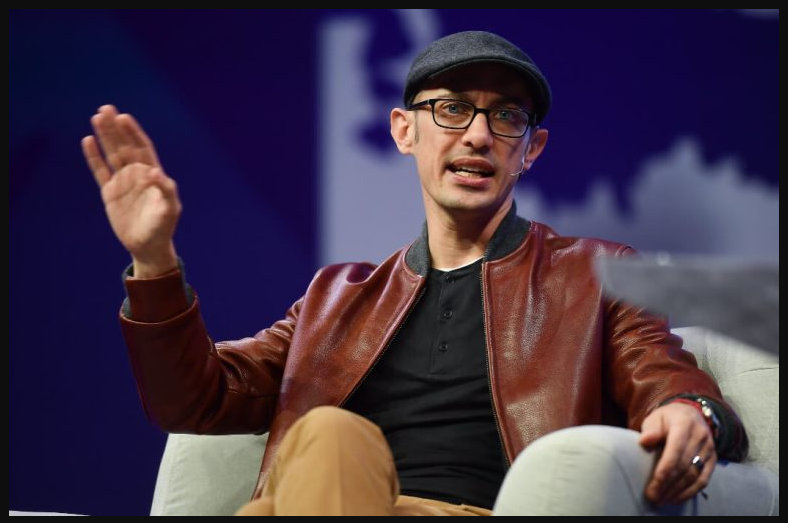
Tobi Lütke, the German-Canadian programmer who started Shopify to sell snowboards online, has spent the better part of two years repositioning the company around what he calls “agentic commerce” — a vision in which AI assistants like ChatGPT, Gemini, and Perplexity become the primary interface through which people discover and buy products, with Shopify’s two million merchants as the supply behind the curtain. Lütke’s personal net worth, estimated between $10.5 billion and $15 billion depending on the index, has tracked that bet closely.
The headline question — is this crushing Amazon — deserves a more careful answer than the breathless framing usually gets. The honest version is this: Shopify has made a genuinely bold and clarifying strategic choice. Amazon has made the opposite choice. And as of mid-2026, the early returns suggest the contest is far closer, and far stranger, than a simple “winner emerges” narrative would suggest.
The Founder: An Engineer Who Refused to Take a Salary
To understand Shopify’s AI strategy, it helps to understand the man making the bets — because Lütke’s leadership style has been unusually consistent across two decades, and that consistency is now being tested at a scale he has never faced before.
Tobias Lütke was born on July 16, 1981, in Koblenz, Germany. He was a self-taught coder whose fascination with technology began at age six, when he received a Schneider CPC computer. He never finished a traditional computer science degree, instead apprenticing as a software developer in Germany before moving to Canada. The company’s founding myth is genuinely modest: frustrated by clunky e-commerce software while trying to sell snowboards through his store, Snowdevil, Lütke built his own platform. By 2006, that platform had become Shopify.
What has distinguished Lütke from most billionaire technology founders is the way he has structured his own incentives. His official annual salary has been $1 for years, with his actual wealth accumulation occurring entirely through Shopify equity — he owns approximately 6 to 7 percent of the company, concentrated in Class B shares that carry outsized voting power, giving him roughly 40 percent control despite the modest equity stake. That structure means Lütke’s fortune rises and falls entirely with Shopify’s stock price, with no salary cushion to soften downturns — a genuinely different risk profile than most founder-CEOs accept.
Lütke is also an active angel investor with a notably technical eye. His personal portfolio spans 43 companies as of early 2026, with six exits, the most recent being Promptfoo — an AI application security and testing platform that OpenAI later profiled as an example of an agentic startup built on its reasoning models. That detail is worth noting: Lütke was investing in AI agent infrastructure companies well before “agentic commerce” became Shopify’s official strategic banner.
The Vision: Commerce Without a Checkout Page
Shopify’s AI strategy rests on a genuinely significant bet about how online shopping will work in the very near future — and it is a bet that requires Shopify to give away something most platforms would guard jealously: direct access to its merchant catalog.
In January 2026, Google and Shopify unveiled the Universal Commerce Protocol at the National Retail Federation conference — an open standard for how AI agents discover, compare, and transact with merchants, independent of which AI assistant the consumer happens to be using. By March 11, 2026, Shopify had auto-activated “Agentic Storefronts” for all eligible US merchants, meaning over two million Shopify stores became automatically discoverable inside ChatGPT’s shopping experience, with no merchant action required. Consumers could find, compare, and buy Shopify products through ChatGPT conversations without visiting Amazon or any traditional marketplace.
The structural logic behind this is the inversion of Amazon’s entire business model. Amazon makes money by being the destination — controlling the search, the comparison, the reviews, the checkout, and the advertising layer that sits on top of all of it. Shopify, by contrast, makes money regardless of where the discovery happens, as long as the transaction eventually clears through a Shopify-powered storefront. Lütke’s bet is that as AI assistants become the default way people shop, the company that wins is not the one with the biggest walled garden — it’s the one whose infrastructure works everywhere the conversation happens to be occurring.
CEO Tobi Lütke has been explicit about this framing, describing the strategy internally and publicly as “Agentic Commerce” — positioning Shopify not as a competitor trying to out-market Amazon, but as the connective tissue between independent brands and however consumers choose to shop in an AI-mediated future.
Amazon’s Counter-Move: Build the Wall Higher
While Shopify opened its catalog, Amazon did the opposite — and the contrast between the two strategies is the most important story in e-commerce in 2026.
Amazon updated its robots.txt files to block OpenAI’s crawlers entirely, removing 600 million products from ChatGPT’s shopping results. It blocked dozens of AI agents from accessing its site. It sued Perplexity in November 2025, attempting to prevent the startup’s Comet browser from scraping and making purchases on users’ behalf, with the legal battle now heading to Ninth Circuit oral arguments in June 2026. Perplexity’s public response was sharp: it characterized Amazon’s lawsuit as an attempt to block shoppers from using AI agents specifically because, as the company put it, AI agents don’t have eyeballs to see the advertising Amazon profits from and cannot be upsold the way human shoppers can.
That line gets at the real commercial tension. Amazon’s marketplace economics depend heavily on sponsored placements, algorithmic upselling, and a retail media business that generates enormous margin from human attention and impulse browsing. An AI agent that simply executes a pre-specified purchase intent — buy the cheapest version of X that meets criteria Y — threatens that entire revenue layer. Amazon’s wall-building is not really about protecting customers. It is about protecting the advertising business that AI agents are structurally incapable of being upsold by.
Instead, Amazon built its own AI shopping tools: the Rufus chatbot, embedded directly in the Amazon app, and a “Buy For Me” autonomous purchasing agent. The results have been genuinely strong on Amazon’s own turf — Rufus drives an estimated $12 billion in incremental annual sales, reaching over 300 million customers, with purchase sessions involving Rufus converting at more than three times the rate of non-AI sessions.
The Plot Twist: OpenAI Picked Amazon
Here is where the “Shopify crushing Amazon” narrative runs into a genuinely inconvenient complication that most breathless coverage of the AI commerce race has underplayed.
In February 2026, OpenAI and Amazon announced a strategic partnership that included a $50 billion investment from Amazon into OpenAI. Within days, OpenAI quietly removed Instant Checkout from ChatGPT — the flagship commerce feature that had been the centerpiece of the Shopify-OpenAI partnership since the fall of 2025 — for both Shopify merchants and other retailers. Six months after its September 2025 launch, only about 30 merchants had gone fully live on Instant Checkout, and a Walmart executive revealed that purchase conversion rates within ChatGPT were roughly one-third of those on Walmart’s own site.
That is a significant setback for the “AI agents replace Amazon” thesis, and it complicates the simple version of the Shopify-versus-Amazon story considerably. The company widely expected to disintermediate Amazon’s marketplace dominance instead struck a massive financial partnership with Amazon and walked back its most aggressive commerce feature within six months of launch.
Shopify’s response was to pivot toward Google’s Universal Commerce Protocol and continue building out ChatGPT’s product discovery surface — now the largest in AI, with ChatGPT’s 900 million weekly active users browsing and comparing products even though purchases redirect through merchant sites rather than completing natively inside the chat. Shopify also maintains relationships across the broader AI ecosystem: Perplexity, Claude, Gemini, and DeepSeek all now drive trackable referral traffic to Shopify stores, giving the platform genuine diversification that Amazon, by walling itself off, does not have.
The Honest Scoreboard
So is Tobi Lütke’s AI commerce vision crushing Amazon? The most accurate answer, examined against the actual 2026 data, is: not yet, not cleanly, and possibly not in the way the framing implies.
What Shopify has accomplished is genuinely impressive. Revenue reached $11.6 billion in 2025, with net income of $1.23 billion — a company executing at serious scale while simultaneously repositioning its entire go-to-market philosophy around an unproven new technology paradigm. The decision to embrace open AI commerce protocols rather than build a walled garden is a coherent, defensible strategic bet that plays to Shopify’s core identity as infrastructure rather than destination.
What it has not done is dethrone Amazon. Amazon’s Rufus and Buy For Me tools are converting at rates Shopify’s AI integrations have not matched. Amazon’s $50 billion alliance with OpenAI suggests the marketplace giant successfully co-opted the very AI company that briefly looked poised to disintermediate it. And the broader agentic commerce market — while growing at an estimated 45 percent annually and already worth $60 billion — remains genuinely unsettled, with 61 percent of merchants reportedly unprepared for the shift regardless of which platform they use.
What Lütke has actually built is not a weapon crushing Amazon. It is a credible, well-capitalized alternative infrastructure layer that gives the two million merchants who don’t want to live inside Amazon’s walled garden a serious, AI-native way to compete — one that doesn’t require playing by Amazon’s advertising-driven rules. That is a meaningful achievement. It is also a more modest one than the headline question implies.
The real story of 2026 is not Shopify crushing Amazon. It is two fundamentally different theories of commerce — open infrastructure versus closed marketplace — being tested simultaneously, in real time, with AI as the new battlefield neither company fully controls yet. Tobi Lütke’s bet is that openness wins because the AI ecosystem itself rewards interoperability. Amazon’s bet is that scale, trust, and an unmatched logistics network can absorb AI disruption the way they have absorbed every previous disruption. Both bets are plausible. Neither has been proven. And the merchants and consumers caught between them are, for now, the ones actually deciding which vision wins.
Key Facts: Tobi Lütke was born July 16, 1981, in Koblenz, Germany. He co-founded Shopify in 2004, launched it publicly in 2006, and has served as CEO since 2008. His estimated net worth in 2026 ranges from $10.5 billion (Bloomberg) to $15 billion (Celebrity Net Worth), derived primarily from a 6–7% Shopify equity stake. Shopify reported $11.6 billion in revenue and $1.23 billion in net income for 2025. Shopify activated Agentic Storefronts for ChatGPT by default on March 11, 2026, syndicating over 2 million merchant stores. Amazon announced a $50 billion investment in OpenAI on February 27, 2026; OpenAI removed ChatGPT’s Instant Checkout feature days later. Amazon’s Rufus AI assistant drives an estimated $12 billion in incremental annual sales across more than 300 million customers.


We create powerful, insightful content that fuels the minds of entrepreneurs and business owners, inspiring them to innovate, grow, and succeed.