


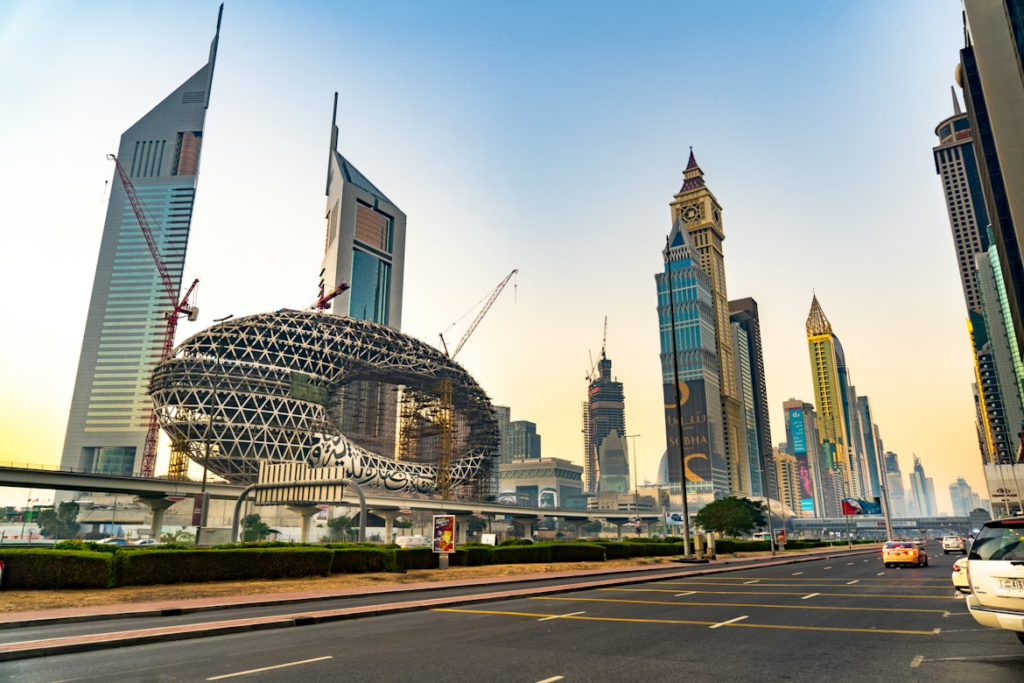
The UAE has become a dependable base for founders and investors who want scale with stability.
It offers strong infrastructure, predictable rules, and fast access to markets across the Middle East, Africa, and South Asia. For many teams, that mix shortens the road from idea to impact.
Trade and Investment Snapshot
Capital keeps flowing into the country, which signals confidence. A 2024 fact sheet from UNCTAD reported inward FDI of about $45.6 billion for the year, placing the UAE among the world’s top destinations.
This depth of investment supports services, logistics, and new ventures that cluster around major hubs. Dubai International Financial Centre sits at the heart of many cross-border deals.
In practice, teams often choose a holding or project vehicle here to manage risk and governance. You can streamline setup with a DIFC prescribed company establishment, which is designed for lean operations, and then add licenses or structures as you grow. That flexibility helps founders stay focused on execution.
Regulatory clarity reinforces investor confidence. UAE free zones offer tailored incentives, simplified reporting, and 100% foreign ownership, which attract entrepreneurs and multinational corporations alike.
Sector-specific growth, such as fintech, logistics, and renewable energy, creates concentrated opportunities for specialized investment.
Tax Clarity and Free Zone Benefits
Policy is transparent and published, which reduces guesswork. Guidance from DIFC notes that Qualifying Free Zone Persons face a 0 percent rate on qualifying income, subject to meeting the rules and substance tests.
This gives companies a clear runway to plan cash flow and reinvest in growth.
What This Means in Practice
- Free zone rules are documented and testable against your business model
- Corporate tax has clear thresholds and definitions
- Planning can account for cross-border income and substance from day one
Entrepreneurial Ecosystem and Talent
Founders thrive where the ecosystem sets a high bar. The Global Entrepreneurship Monitor ranked the UAE number one worldwide again in its 2024 to 2025 report, reflecting support across funding, education, and policy.
That score aligns with what many see on the ground – a deep network of accelerators, meetups, and investors.
Diversification is real rather than a slogan. An IMF staff report in late 2024 highlighted strong non-hydrocarbon growth led by tourism, construction, manufacturing, and financial services.
For new entrants, this means your market is not tied to a single commodity cycle and can absorb specialized offerings.
Legal Certainty and Double Tax Reach
When you sell in several countries, treaty coverage matters. The Ministry of Finance reports that the UAE has concluded 193 double taxation agreements and bilateral investment treaties with key partners.
This web of agreements can reduce withholding tax, protect investments, and simplify repatriation.
Regulatory options match different stages of a company’s life. DIFC describes its Prescribed Company as a private vehicle that qualifying applicants can set up for specific purposes under dedicated regulations.
Teams use it for holding assets, ring-fencing projects, or structuring participation rights before moving to a full operating license.
How This Plays Out for Founders
The path to market is usually faster since core services are stitched together. Banking, payments, legal, and advisory firms sit within minutes of each other in major free zones.
A 2024 annual review from DIFC noted rising company registrations and profits, reflecting the cluster effect that benefits newcomers who plug into the same ecosystem.
Access to talent is easier within these hubs, as skilled professionals often gravitate toward established clusters. Shared networks and industry events develop collaboration, partnerships, and knowledge exchange.
Founders can leverage incubators and accelerators to refine offerings and secure early-stage funding.
Operational support, from HR to IT, is typically on-hand, reducing administrative burdens. Together, these advantages help startups scale efficiently as you navigate local regulations and market demands.
Access to Trade Corridors
Market access extends beyond the Gulf. Public statements in 2024 pointed to record non-oil trade in the first half of the year, which shows how the UAE serves as a throughput for goods and services.
For operators, that scale translates into better logistics, faster customs processes, and more reliable partners.
Strategic location connects ports, airports, and free zones, reducing transit times to Asia, Europe, and Africa. Efficient customs clearance and bonded warehouses streamline import-export operations.
Trade agreements and regional partnerships lower barriers and improve predictability for shipments.
Businesses benefit from a concentration of freight forwarders, carriers, and logistics providers that simplify complex routes. Together, these factors make the UAE a hub for smooth, scalable international trade.

Practical Pointers for Setup
Start with your end state and build backward. Map your regulatory needs, capital flows, and hiring plan, then select the right zone, license type, and entity structure. Keep documentation tight, align substance with activity, and track treaty benefits that apply to your markets.
The UAE does not guarantee success, but it reduces the friction that slows many ventures elsewhere. With transparent rules, strong infrastructure, and a deep talent pool, it gives founders a fair shot at regional and global scale.
If your plan depends on speed and certainty, this is one of the few places where both can live together.


We create powerful, insightful content that fuels the minds of entrepreneurs and business owners, inspiring them to innovate, grow, and succeed.