


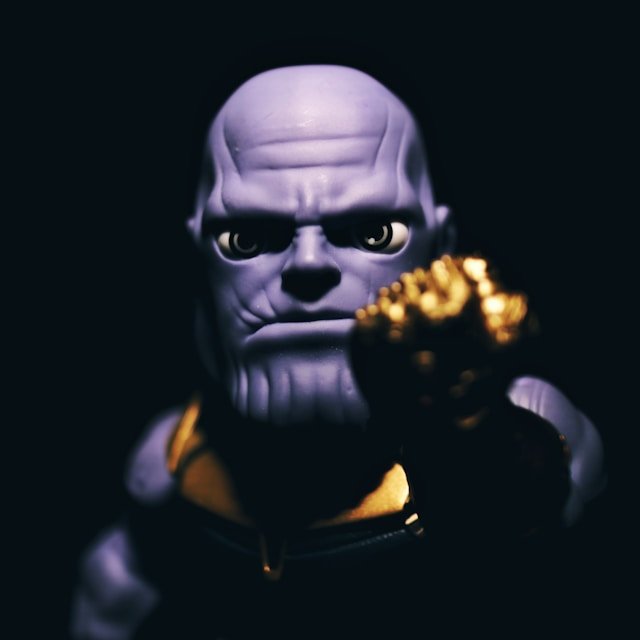
Thanos, known as the Mad Titan, is a character who has profoundly impacted the Marvel Comics universe since his inception. Created by writer Jim Starlin, Thanos made his first appearance in Iron Man #55 in 1973. The character was inspired in part by the works of philosopher Friedrich Nietzsche and serves as an embodiment of nihilistic ideals. His lore is rich and complex, establishing him as a formidable villain within the Marvel pantheon.
Thanos hails from the moon of Titan, a place once home to a highly advanced civilization. His origins are intertwined with themes of alienation and existential angst. Thanos is a member of the Eternals, a group of superhuman beings; however, he is marked by a genetic mutation that gives him a grotesque appearance, setting him apart from his peers. This difference instilled in him a sense of isolation, leading to his descent into villainy. Thanos’s quest for power and control often revolves around obtaining the Infinity Stones, which grant him god-like abilities, reinforcing his status as one of Marvel’s most potent adversaries.
His motivations, including a desire to court the personification of death, reveal a complexity that elevates him above many other villains, often eliciting sympathy from audiences. Over the decades, Thanos has become synonymous with ambition and tragedy, leading to his pivotal roles in major story arcs such as The Infinity Gauntlet, where he famously seeks to balance the universe through destruction. This quest has cemented his place in comic book history and popular culture, marking him as an enduring figure whose complexity continues to captivate audiences worldwide.
The Creation of Thanos
The character of Thanos, often referred to as the Mad Titan, is one of the most significant antagonists in the Marvel Comics universe, and his creation is attributed to the artistic and narrative vision of writer-artist Jim Starlin. First appearing in *The Invincible Iron Man* #55 in 1973, Starlin originally conceived Thanos as a formidable villain with a complex backstory. His design and personality were influenced by various philosophical themes, particularly those surrounding existentialism and the nature of power.
Starlin’s inspiration for Thanos stemmed from various sources, including his fascination with cosmic entities and his desire to explore themes of mortality and the human condition. The character was initially introduced as a member of the Eternals, a race of superhumans, which contextualized his immense powers and his overarching conflict with Earth’s heroes. Thanos’ physical appearance, characterized by his purple skin and imposing stature, was designed to convey his formidable presence and differentiate him from other villains at the time.
Over the years, the character has undergone significant development, evolving from a mere villain in the background to a multifaceted and iconic figure in the Marvel universe. Starlin’s choice to intertwine Thanos with the Infinity Gauntlet saga was particularly impactful, positioning him as a central figure in Marvel’s cosmic storyline. The Mad Titan’s quest for the Infinity Stones amplified his obsession with death and power, further enriching his narrative depth. This journey reflects broader themes of ambition, morality, and the consequences of seeking ultimate authority.
Thanos’s progression throughout the comics illustrates the meticulous process behind his creation, showcasing how Jim Starlin’s artistic choices and thematic explorations contributed to shaping an enduring character who resonates with audiences to this day.
Thanos’ Backstory and Motivations
Thanos, often referred to as the Mad Titan, hails from the moon of Saturn known as Titan. In a realm characterized by advanced technology and intellectual achievement, Thanos stood out as an outcast due to his distinctive appearance, a result of his Eternal heritage. This sense of isolation during his formative years instilled in him feelings of inadequacy, which later developed into an unquenchable thirst for power and validation.
Growing up on Titan, Thanos faced rejection from his family and peers, compounded by the perception of his differences. His mother, Sui-San, harbored deep disdain for him and viewed him as a threat to their race. This neglectful upbringing cultivated an intense psychological complexity, fostering a desire not only to prove his worth but also to gain ultimate control over the universe. Thanos’ experiences profoundly influenced his worldview, driving him towards nihilism and the belief that death was a necessary balance to existence.
The psychological factors that drive Thanos’ relentless quest for power are multifaceted. His obsession with control is largely rooted in a catastrophic event that he witnessed on Titan, where a significant portion of the population perished due to overpopulation and dwindling resources. This pivotal moment fueled his conviction that he must act as a savior of sorts, seeking to impose his vision of equilibrium across the universe. As his desires evolved over time, they manifested in his pursuit of the Infinity Stones, seeking to harness their combined power to obliterate half of all life.
In seeking the Infinity Stones, Thanos embodies the struggle between his desires for love, acceptance, and ultimately, dominion. His motivations are not simply to conquer; they are intrinsically linked to a deeper, conflicted quest for meaning and legacy in a universe that he often perceives as chaotic and unforgiving.
Thanos in the Marvel Universe
Thanos, often referred to as the Mad Titan, is one of the most formidable adversaries within the Marvel Universe. He made his first appearance in 1973 in Iron Man #55, created by writer Jim Starlin. Immediately, readers were introduced to his complex character, driven by a twisted sense of nihilism and obsession with death. This initial appearance set the stage for his subsequent involvement in various significant story arcs, impacting numerous heroes and storylines throughout the Marvel Comics legacy.
Thanos has prominently featured in some of the most iconic Marvel narratives, including The Infinity Gauntlet and its sequels, where he battles the Avengers and other superhero teams. His quest to harness the power of the Infinity Stones exemplifies his ambition to achieve ultimate power and control over existence itself. During these arcs, Thanos’ violent confrontations with characters like Iron Man, Captain America, and the cosmic entities push the boundaries of heroism and sacrifice, presenting moral dilemmas that resonate throughout the narrative.
In addition to battling traditional superhero teams such as the Avengers, Thanos also interacts with other groups like the Guardians of the Galaxy. His confrontations with these characters further highlight his multifaceted personality, oscillating between nihilism and moments of unexpected depth, particularly in his relationship with characters like Gamora, who he considers a daughter. These interactions enrich his character development and illustrate the extensive reach Thanos has within the Marvel Universe.
Moreover, the character’s influence extends beyond the comic pages into various adaptations, such as the Marvel Cinematic Universe, where his role has been crucial to connecting multiple story arcs. Overall, Thanos remains a central figure, leaving a lasting impact on the Marvel mythos, representing a significant challenge that testifies to the resilience and unity of the superheroes he opposes.
The Infinity Gauntlet Saga
The ‘Infinity Gauntlet’ storyline stands as a monumental arc within the Marvel Comics universe. It revolves around the Mad Titan, Thanos, and his fervent quest to gather the six Infinity Stones, each of which bestows its wielder with immense cosmic power. These stones, representing various aspects of existence—Space, Time, Reality, Power, Mind, and Soul—enable Thanos to wield control over the universe itself when united within the eponymous Gauntlet. The underlying motivation for Thanos’s actions is his desire to impress Mistress Death, the embodiment of death itself, prompting him to wipe out half of all life in the universe.
This saga intricately explores key themes such as obsession, love, and the morality of power. Thanos’s character is depicted not merely as a villain, but as a tragic figure consumed by his longing for acceptance and love. The narrative cleverly juxtaposes his motivations against those of the heroes of the Marvel Universe, who come together to challenge his reign of terror. The conflict thus evolves from a physical struggle to an emotional examination of the characters’ values and beliefs.
As Thanos obtains each stone, we witness significant character dynamics unfold. Major heroes such as Iron Man, Thor, and Captain America are forced to reconcile their strengths and weaknesses, highlighting their vulnerabilities in the face of absolute power. The stakes escalate as they confront a foe who embodies the very essence of universal destruction. Through these encounters, the saga emphasizes the significance of teamwork and sacrifice, with the fate of existence hanging in the balance. Ultimately, the ‘Infinity Gauntlet’ not only serves as a grand cosmic battle but a deep dive into the depths of ambition and the consequences that accompany pursuing unchecked power.
Thanos in Film and Popular Culture
Thanos, originally conceived in the comic books, has become a cultural phenomenon, particularly through his portrayal in the Marvel Cinematic Universe (MCU). His transition from page to screen is a testament to the character’s complexity and depth, which has resonated with audiences worldwide. The character first made a notable appearance in the MCU during a post-credits scene in ‘The Avengers’ (2012), sparking intrigue and anticipation for his eventual role as a primary antagonist in subsequent films.
In ‘Avengers: Infinity War’ (2018), Thanos emerges as the formidable foe whose quest for the Infinity Stones drives the narrative forward. Portrayed by Josh Brolin, Thanos is depicted not merely as a villain but as a character with a warped ideology that seeks to balance the universe through drastic means. This representation brought forth a nuanced layer to his character, illustrating his motives and rationale, however misguided they may be. The film explores his interactions with other iconic characters, highlighting the stakes involved as he attempts to achieve his goal.
‘Avengers: Endgame’ (2019) further delves into Thanos’s character, showing the repercussions of his actions portrayed in the previous film. This film serves as a critical juncture for the Avengers and the broader MCU narrative, as they grapple with the aftermath of his destructive snap. The complex portrayal of Thanos invites discussions on morality, power, and sacrifice, demonstrating how characters in the MCU are never one-dimensional. As a result, Thanos has transcended the role of a typical comic book villain, embedding himself into popular culture as a symbol of ultimate power and ethical dilemmas.
Thanos’ Legacy and Impact
Thanos, often referred to as the Mad Titan, has emerged as one of the most formidable and iconic villains in comic book history. His character, introduced by writer Jim Starlin in 1973, has transcended the confines of the comic book medium, leaving a profound legacy that resonates across various platforms. Thanos’s influence is particularly evident in the evolution of supervillains as multifaceted characters rather than mere antagonists. His motives, often driven by a distorted sense of balance and necessity, challenge the simple dichotomy of good versus evil, prompting deeper exploration of villainy in modern storytelling.
The impact of Thanos extends beyond the printed page into other media, most notably in blockbuster films. With the release of the Marvel Cinematic Universe’s “Avengers: Infinity War” and “Avengers: Endgame,” Thanos’s ideology and actions reached a wider audience. These films illustrated his complexity, portraying him not just as a villain but as a tragic figure whose beliefs drive his actions. This multifaceted portrayal has redefined audience expectations for villains, integrating psychological depth into their narratives. As a result, Thanos has influenced the creation and development of subsequent villains within both comics and films, prompting writers to delve into the psychological and philosophical aspects of their characters.
Furthermore, Thanos’s presence in popular culture has affected public perceptions of villainy. His famous quote, “I am inevitable,” encapsulates the grim determination that many contemporary villains now embody. This quote has entered the lexicon, symbolizing a shift towards a more nuanced understanding of antagonism. As a cultural icon, Thanos has ignited discussions about morality, ethics, and the nature of power in society, making him not only a character within a fictional universe but also a metaphorical lens through which various real-world issues can be examined. Thus, the legacy of Thanos is not just in the tales told about him but also in the broader narrative these tales weave about human nature and conflict.
Critisques and Controversies
Thanos, often referred to as the Mad Titan, has elicited a wide range of critiques and controversies throughout his existence in the Marvel Comics universe. One prominent area of discussion revolves around his motivations. While Thanos purports to pursue a balance in the universe through population control, this notion raises significant moral questions. Many fans and critics argue that his justification for mass destruction lacks a measurable ethical framework, as it disregards the intrinsic value of individual lives. This presents a dichotomy of perception where some view him as a twisted savior, while others see an embodiment of tyranny.
Moreover, Thanos’s portrayal in various media has been a point of contention among fans. For instance, the characterization in the Marvel Cinematic Universe (MCU) offers a more emotionally complex version of the character compared to his comic book origins. This shift has been both lauded and criticized, sparking heated debates about the true essence of Thanos. Supporters of the cinematic interpretation appreciate the depth of his motivations and emotional struggles, while traditionalists oftentimes argue that these changes dilute the core of his villainy.
Further complicating this discourse are the discussions surrounding gender representation and systemic issues within the franchise. Thanos’s predominantly male-centric world raises concerns about feminism and inclusivity, prompting some to critique the prevailing narratives surrounding his character. The controversial actions undertaken by Thanos, inclusive of genocidal decisions, bring forth substantial moral implications, making him both a feared villain and a strangely sympathetic figure for some readers.
As discussions continue to evolve, the critiques and controversies tied to Thanos’s character serve to illuminate the complex dynamics of comic book storytelling and its intersection with evolving societal norms. These multifaceted interpretations not only highlight the problems inherent in his portrayal but also speak to the larger impact that such characters have on popular culture.
Conclusion: The Enduring Fascination with Thanos
Thanos, the Mad Titan of Marvel Comics, stands as one of the most complex and intriguing characters in the comic book universe. His multifaceted personality and the intricacies of his motives have led to an enduring fascination among audiences. The universal themes of power, obsession, and destiny that Thanos embodies resonate deeply, providing rich material for both readers and viewers alike.
At his core, Thanos is driven by an insatiable desire for control. His quest for the Infinity Stones and his ambitions to reshape the universe reflect humanity’s age-old struggle with power dynamics. The allure of ultimate power, coupled with the dire consequences it entails, speaks to a fundamental aspect of the human experience. It compels audiences to reflect on the ethical implications of power and the moral dilemmas that arise from it.
Moreover, Thanos’s obsession with balance brings another layer of depth to his character. He believes that the universe must maintain equilibrium, a viewpoint that challenges the audience to consider their own perspectives on order and chaos. This notion of sacrifice and necessity echoes through various narratives, striking a chord that is both troubling and thought-provoking.
Lastly, the theme of destiny, intertwined with Thanos’s character arc, suggests that even the most powerful figures are subject to a greater cosmic order. This idea of destiny introduces a philosophical dimension that encourages viewers to ponder fate versus free will in their own lives. Such themes ensure that Thanos remains a compelling figure in the Marvel landscape, inviting ongoing discussion and analysis.
Through his profound psychological depth and thematic significance, Thanos exemplifies why he will continue to captivate audiences for years to come.


We create powerful, insightful content that fuels the minds of entrepreneurs and business owners, inspiring them to innovate, grow, and succeed.