


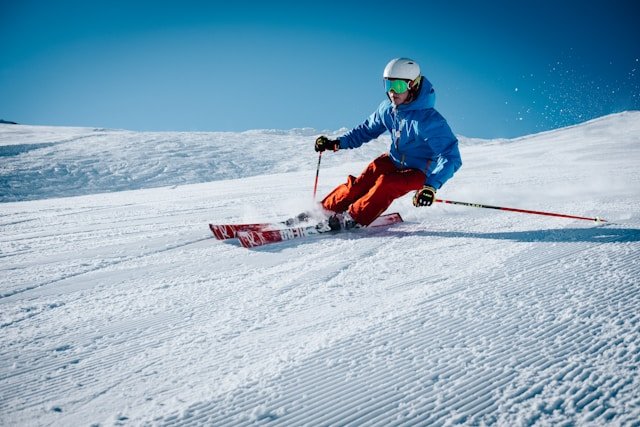
Introduction to Skiing: Embrace the Slopes
Skiing is a thrilling winter sport that captivates individuals with its blend of speed, agility, and the breathtaking beauty of snowy landscapes. For many, the sensation of gliding down a slope, surrounded by towering mountains and crisp, cool air, is an exhilarating experience that is hard to match. As a beginner, embracing this incredible sport requires not only enthusiasm but also an understanding of essential techniques and equipment involved in skiing.
At the outset, it is crucial to familiarize oneself with the basic ski equipment. Proper gear, including skis, boots, and poles, enhances both the safety and enjoyment of your skiing experience. Skis come in various designs tailored to different skiing styles, such as alpine, freestyle, and cross-country. Boots must fit securely to provide adequate control while navigating slopes. Additionally, ski poles assist with balance and rhythm during your descent. Investing in high-quality equipment helps beginners to learn effectively while minimizing the risk of injury.
Before hitting the slopes, acquiring the fundamental techniques is essential. Learning how to ski is more than just sliding down hills; it involves mastering skills like balance, turning, and stopping, which can significantly impact one’s safety and enjoyment. Attending a ski school with professional instructors can accelerate this learning process, offering invaluable guidance tailored to your skill level. Moreover, understanding snow conditions and the workings of ski lifts contributes to a safe and smooth skiing experience.
The joy of skiing extends beyond mere adrenaline; it fosters a sense of community and connection with nature. By embracing the learning process and preparing adequately, beginners can fully appreciate the pleasures of skiing and embark on a fulfilling journey on the slopes. With practice and dedication, mastering skiing techniques leads to an engaging and rewarding winter activity.
The Athletic Stance: Foundation of Good Skiing
An athletic stance is essential when learning how to ski effectively. This position not only aids balance but also enhances control and responsiveness to the ski movements on various terrains. To adopt the ideal athletic stance, it is important to keep your knees bent, which allows for better shock absorption and stability. Additionally, slightly flexed ankles help in maintaining contact with the skis, giving you increased leverage and efficiency in your skiing technique.
When you engage in skiing, shifting your weight forward is crucial. This forward-leaning weight distribution allows you to navigate turns with precision and enables quicker transition from edge to edge. A common mistake novice skiers make is leaning back on their skis, which can lead to loss of control and hinder smooth maneuvering. Thus, achieving a proper balance while skiing starts from the feet all the way up to the core.
To achieve and maintain the athletic stance, consider the following tips: First, begin by standing with your feet shoulder-width apart. Bend your knees so that your thighs are approximately parallel to the ground. Second, ensure your weight is evenly distributed on the balls of your feet while keeping your heels firmly grounded. Third, engage your core muscles, as this further stabilizes your upper body and promotes a smooth skiing motion. Remember that the athletic stance should feel natural and comfortable, as this will enhance your overall skiing experience.
In summary, a solid athletic stance is the foundation for successful skiing. By mastering this position, you can significantly improve your control, balance, and overall skiing performance. When you succeed in maintaining the athletic stance, you are on your way to mastering the art of skiing.
How to Bend Your Knees and Flex Your Ankles
Understanding how to ski effectively begins with mastering the fundamentals of posture, particularly the mechanics of knee bending and ankle flexing. These actions are crucial as they greatly influence your stability and control while navigating various terrains on the slopes. Proper knee bending allows for a balanced center of gravity, which is essential for making turns and maintaining momentum. When you bend your knees, you support your weight and lower your center of gravity, enabling better responses to shifts in terrain and speed.
Additionally, flexing your ankles plays an integral role in achieving the requisite posture for skiing. Ankle flexion, when performed correctly, allows for a more natural alignment of the body over the skis. This positioning is vital as it helps in transferring weight effectively and engaging the edges of the skis, giving you better grip on the snow. Learning how to flex your ankles involves keeping your feet flat on the ski soles, as this flexibility provides the necessary responsiveness during turns.
It is advisable for beginners to focus on these two key movements during practice sessions. For those looking to enhance their understanding, visual aids or diagrams can be beneficial in illustrating the proper angles and alignment. Take the time to observe seasoned skiers and note how they bend their knees and flex their ankles as they execute turns and navigate slopes. Eventually, by incorporating these techniques into your skiing, you will notice a marked improvement in your control and overall performance on the mountain.
Keeping Your Weight Forward: A Key to Balance
When embarking on the journey of learning how to ski, one fundamental aspect that plays a crucial role in ensuring both balance and control is the positioning of your weight. Keeping your weight forward is essential not only for stability but also for enhancing maneuverability as you navigate various terrains on the slopes. For beginners, understanding and mastering this technique can significantly prevent falls and foster confidence while skiing.
Maintaining your weight forward means that your center of gravity is positioned over your skis. Essentially, your body should be slightly leaning toward the front, specifically over the tips of your skis. This position allows for greater control in both turns and stops. A common challenge new skiers face is leaning back on their skis, which often leads to a loss of balance and the inability to respond swiftly to changing conditions.
To practice keeping your weight forward while skiing, start by standing in a relaxed position on your skis with your knees slightly bent. As you glide down the slope, focus on shifting your upper body forward, ensuring that your torso is above your knees rather than behind them. One effective method is to visualize yourself sliding your shins toward the front of your boots. You may also want to try skiing with your hands forward, which naturally encourages a more forward-leaning posture.
Another practical exercise is to practice making turns. As you initiate a turn, consciously shift your weight to the inside edge of the ski that is on the downhill side. This will not only help you maintain your balance but also improve your turning capability on the slopes. Continuously practicing this forward weight distribution will ultimately build your confidence and skill in skiing.
One of the foundational aspects of learning how to ski effectively is achieving proper shin and boot alignment. Maintaining contact between your shins and ski boots is crucial in creating a direct connection between the skier and the snow, ultimately enhancing control and performance on the slopes. When the shins press firmly against the boot tongues, skiers benefit from increased responsiveness and stability, which is essential when navigating various terrains.
To achieve optimal shin and boot alignment, it is necessary to ensure that your ski boots fit snugly. A well-fitted boot will allow your shins to make consistent contact, enabling better energy transfer. Begin by buckling your boots tightly, taking care not to compromise circulation. A common practice is to flex your knees and lean slightly forward, allowing your shins to push against the front of your boots. This active engagement is crucial; passive skiers often struggle with control and are more likely to fall.
Regularly practice the stance by simply standing on flat ground in your ski boots. Feel your knees bend slightly with your weight distributed evenly on your feet. This exercise will help you develop muscle memory, making it easier to replicate the feeling while skiing. Furthermore, during skiing, consciously check your alignment as you move. Keeping your weight centered over your skis will enhance your ability to make quick turns and adjustments.
Employing techniques such as the “forward lean drill” can also prove beneficial. This involves practicing flexing your ankles and leaning forward while maintaining that intimate connection with your boots, reinforcing the necessary posture to ensure effective weight distribution. As a skier develops their skills, refining shin and boot alignment should remain a priority, as it enhances not only the enjoyment of skiing but also the overall learning process.
Starting Simple: Learning on Gentle Slopes
For beginners venturing into the world of skiing, selecting gentle slopes is a crucial step in their learning journey. These gradual inclines not only reduce the intimidation factor but also allow novices to build essential skiing skills in a safe environment. Learning on gentle slopes lays the foundation for more advanced techniques, fostering both confidence and competence.
To maximize the benefits of gentle slopes, it is important to choose the right terrain. Beginners should look for areas specifically designated for novice skiers, which typically feature a variety of gentle runs. These runs should be wide and well-maintained, providing ample space to practice turning, stopping, and navigating through basic skiing movements. Ski resorts often categorize slopes using color codes, so it’s advisable to start with green runs, which denote the easiest level of difficulty.
While skiing on gentle terrain, beginners will have the opportunity to understand the mechanics of skiing better. This includes mastering the stance, balance, and edge control necessary for effective skiing. It is essential for learners to spend time focusing on proper form, as this sets the stage for learning how to ski more effectively on steeper slopes later on. Furthermore, practicing on gentle slopes allows beginners to feel the dynamics of their movements, enabling them to refine their skills through repetition.
Overall, starting on gentle slopes not only enhances safety but also cultivates a positive mindset towards skiing. As beginners gain experience and confidence, they can gradually challenge themselves on inclines that are a bit steeper. Embracing this methodical approach fosters a strong foundation, ensuring future success as they progress in their skiing journey.
Mastering the Snowplow (Pizza) Technique
The snowplow technique, often referred to as the pizza technique, is a fundamental skill that every beginner skier must learn. This method is crucial for controlling your speed and stopping effectively on the slopes. By forming a wedge shape with your skis, you can manage your descent more confidently.
To practice the snowplow, begin on a gentle slope where you feel comfortable. Start by positioning your skis parallel to each other shoulder-width apart. As you prepare to ski, slowly move the tips of your skis towards each other while pushing the tails away. This creates a wedge shape resembling a slice of pizza, which is where the technique gets its name.
Once you have formed the wedge, focus on your weight distribution. Lean slightly forward, ensuring your weight is centered over your skis. This position not only enhances your balance but also allows you to respond more effectively to the terrain. As you glide down the hill, you should feel a natural deceleration; if you find yourself gaining too much speed, simply increase the angle of your wedge by pulling your ski tips closer together.
Stopping effectively is another important aspect of mastering the snowplow technique. As you approach a stop, deepen your wedge by pushing the heels of your skis apart while keeping the tips aligned. This action creates greater friction with the snow, bringing you to a halt. It is advisable to practice stopping on flat terrain before attempting it on a slope.
In time, as your confidence builds, you can refine this technique to navigate more complex ski areas and slopes. Remember that mastering the snowplow is essential for enhancing your skills and enjoying a safe skiing experience.
Transitioning to Parallel Turns: The Next Step
As you progress in your skiing journey, transitioning from the snowplow technique to parallel turns is an essential milestone. This transition allows for greater control, smoother movements, and the ability to manage speed more efficiently on various terrains. To begin this process, it is crucial to understand the foundational techniques that will help you achieve parallel skiing.
Firstly, one of the most important aspects of making parallel turns is to shift your weight onto the outside ski. This action not only provides stability during the turn but also aids in controlling your direction. As you initiate your turn, focus on shifting your weight gradually, allowing your outside ski to bear the majority of your weight. This practice will help you maintain balance and set a solid foundation for parallel skiing.
Another critical element is developing your balance. While in the snowplow position, beginners often rely on their inside edges for stability. As you work towards parallel turns, practice centering your weight over both skis, ensuring that you feel balanced and grounded. This change may be challenging initially, but with consistent practice, your confidence will grow, ultimately enhancing your skiing performance.
The timing of your movements is also vital in this transition. Effective turns require a coordinated approach: begin your weight shift as you start the turn and follow through with your body rotation. Maintaining a steady rhythm while initiating and completing your turns can make a significant difference in mastering how to ski with precision.
To practice these techniques, find gentle slopes where you can comfortably experiment without the pressure of speed. Repeatedly practicing with focus on your weight distribution, balance, and timing will undoubtedly yield positive results. Embrace this transition confidently, as mastering these skills is a significant step towards becoming a proficient skier.
Looking Ahead: Developing Good Skiing Awareness
For anyone learning how to ski, establishing good skiing awareness is key to mastering the sport. This entails developing the ability to look ahead and be cognizant of the environment and conditions on the slopes. A skiers’ safety largely hinges on their capacity to anticipate obstacles, gauge the incline, and recognize changes in terrain. To cultivate this essential skill, it is imperative to practice looking ahead rather than focusing solely on the immediate path.
One effective strategy is to constantly scan the slope. As you ski, engage your peripheral vision to assess your surroundings. This not only helps in avoiding potential hazards such as other skiers or sudden dips, but also prepares you in advance for upcoming challenges. It is worthwhile to always keep in mind the direction you intend to navigate while concurrently assessing what is in front of you. This proactive approach aids skiers in making timely adjustments to their speed and direction, which is crucial for maintaining control.
Another technique to enhance skiing awareness is to mimic the behavior of experienced skiers. Observe how they continuously gauge their surroundings and make snap decisions based on the terrain. This form of learning is beneficial as it aids beginners in intuitively developing their skiing skills. It is also advisable to engage in exercises aimed at improving spatial awareness and coordination. For example, practicing agility drills on dry land can reinforce the body’s ability to respond effectively on the slopes.
In conclusion, by instilling the habit of looking ahead and remaining aware of your surroundings, you can significantly enhance your skiing abilities. This practice not only promotes safety but also enriches the overall experience of skiing, empowering individuals to navigate the slopes with confidence and control.


We create powerful, insightful content that fuels the minds of entrepreneurs and business owners, inspiring them to innovate, grow, and succeed.