


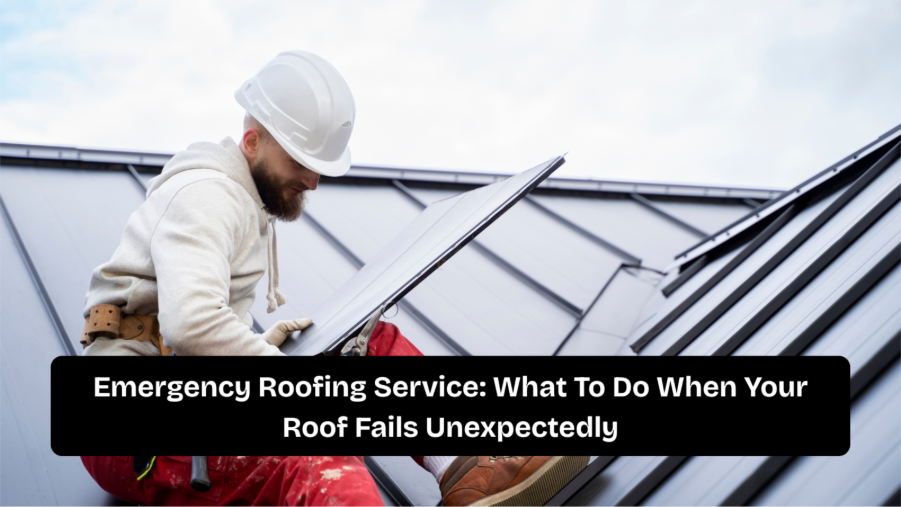
Roof failure does not often give an early warning. A roof can be damaged in minutes by a sudden storm, falling debris, or long-term wear.
Once the water enters the living space or the roofing materials become loose, the situation becomes stressful. The security risks increase, personal items are damaged, and the costs of repairs grow with each delay.
Moreover, poor decisions are usually caused by uncertainty about what to do next. Quick action is essential to minimize the destruction and put the situation under control in an emergency.
Knowing the right action enables property owners to secure their homes, reduce repair expenses, and prevent additional issues. This article addresses the necessary measures to take in the event of a roof failure and the need to control the situation safely and efficiently.
1. Safety First and Preliminary Evaluation
In the event of a roof failure, safety should be considered first, before any decisions on how to repair the structure are made. During the structural damage, ceilings and walls may be weakened, and bare wires may pose electrical dangers.
Thus, zones that demonstrate active leaks, sinking ceilings, or dropping debris should be evaded at the very first opportunity. Cursory examination must be conducted in safe places.
Missing shingles, ripped roofing materials, or holes may be observed during an observation within the home or on the ground. Such indicators assist in defining the seriousness of the issue without exposing a person to greater danger.
It is not safe to climb to the roof during an emergency, and this must be avoided, particularly when there is bad weather or poor light. At this point, an emergency roofing service needs to be contacted.
The professionals are trained to make inspections safely on damaged roofs as well as recognize the unseen dangers. Their early evaluation avoids additional damage and makes sure that temporary protection is properly implemented.
2. Minimise Interior Destruction With Instant Precautionary Measures
Once safety issues have been resolved, the second thing to do is to secure the inside of the home. Water intrusion via a broken roof disperses fast and may impact ceilings, walls, floors, and insulation.
The damage caused by moisture is far-reaching without prompt intervention. Leaks that are active should have buckets or containers that collect water.
Movable items that include furniture, electronics, and valuables should be relocated to avoid irreparable harm. Plastic sheets can be used to cover the remaining items as an additional protective measure.
Where there are water buildups over ceilings, collapses can be avoided through controlled drainage. It is advisable to release the trapped water carefully to reduce the pressure on the ceiling surface.
These measures are not aimed at mending the roof but limiting the damage until professional repairs are done. Early response at this point will save a lot of cleanup and restoration expenses.
3. Determine The Root Cause Of The Roof Failure
To repair the roof effectively, it is important to know the cause of the failure. Damage to the roof is normally due to definite causes and not a spontaneous breakdown.
The most common causes are extreme weather conditions, old materials, improper installation, or no regular maintenance. Storm damage is among the major causes of roof failure.
Strong winds can loosen shingles, hail can crack protective layers, and heavy rainfall can take advantage of weak points that already exist. With time, the roof is worn out by repeated exposure, rendering the structure vulnerable.
Determining the cause assists in making sure the corrective measures are focused on the actual issue. It also aids in insurance documentation through the provision of a clear demonstration of damage. Solutions that simply address surface problems can result in a successive failure when deeper problems are left unchecked.
4. Respond Timely To Avert Secondary Structural Problems
The destruction of the roof is not always confined to the outside. As soon as water penetrates the building, the secondary damage starts. Moisture is absorbed by insulation, wood framing becomes weak, and interior surfaces wear off. These ailments become complicated when they are not addressed.
Emergency roofing is aimed at stabilizing the roof to avoid additional exposure. Temporary tarps, sealed openings, and secured materials are used to prevent further destruction of the structure by weather. Such measures are held until permanent repairs are done safely.
The secondary damage is sometimes more costly than the initial roof repair. Mold, electricity damage, and replacement of the ceiling add to the cost and time to repair. Early intervention minimizes these risks and assists in keeping the living environment safe.
5. Trust Professionals Who Adhere To Safety and Compliance
Repairs done on the roof during emergencies demand expertise, experience, and high safety standards. To ensure safety, qualified professionals adhere to safety-related rules to secure the building and its occupants during repair. The risk of accidents is minimized by proper equipment and safe working procedures.
Building codes guarantee that the repairs are in accordance with the building standards and safety. Such criteria are fundamental to the end-term resilience and subsequent check-ups. The extent of damage, the possibility of repair, and time schedules are also discussed by professionals in an understandable manner.
Effective communication also enables property owners to make sound decisions in stressful conditions. Professional repairs give assurance that the roof will work as desired after repairs.
6. Pay attention to Long-Term Prevention of Emergency Repairs
After carrying out emergency repairs, long-term prevention is significant. A sudden roof collapse commonly uncovers some defects that would not be detected during normal inspection. Solving these problems decreases the risk of emergencies in the future.
Periodic checks of the roof can assist in identifying wear before it is too late. Regular inspections, particularly following storms, enable early repairs that prolong roof life. Small problems solved in the beginning can eliminate great failures in the future.
Improvement of roofing materials can enhance weather and temperature resilience. Contemporary systems are more secure and long-lasting. Detailed records of inspection and repair also facilitate further planning and insurance requirements. Preventive care transforms the experience of an emergency into long-term protection.
Final Thoughts
Sudden roof collapse imposes pressure and uncertainty, yet a knowledgeable response prevents harm and restores order. With safety as a priority, lessening the extent of interior damage, finding causes, and a rapid response help to safeguard property and people.
Professional help is a guarantee that repairs comply with the safety and compliance standards, and preventive planning increases the future stability of the work. Roof emergencies cannot be avoided, but there are always clear decisions and correct maintenance, which safeguard property value and structural integrity in the long term.


We create powerful, insightful content that fuels the minds of entrepreneurs and business owners, inspiring them to innovate, grow, and succeed.